DK Electrical Solutions
205 W Hampton St
Pemberton NJ. 08068
Office hours: 9:00 AM -5:00 PM
Service hours: 7:00 AM - 05:30 PM
What Is The Best Layout For Recessed Lighting?
12Dec
by dkelectrical
0
If your rooms still feel dim or “off” even after you replace bulbs or add lamps, the problem usually is not the fixtures. It is the layout.
Recessed lighting can completely transform how your home looks and feels, but only if the placement, spacing, and beam angles are planned correctly. Too few cans, and you get dark corners. Too many, and your ceiling starts to look like a runway.
If you live in Burlington or Camden County and you are wondering what the best layout for recessed lighting is in your home, you are not alone. In this guide, we walk you through how a professional looks at recessed lighting design, the most effective layout patterns, and how we custom plan lighting for each room so you get bright, comfortable, and efficient light where you actually need it.
Understanding How Recessed Lighting Layout Shapes A Space
The “best” layout for recessed lighting is not one single pattern. It is the layout that supports how you use the room, highlights what matters, and avoids glare and shadows.
When we design recessed lighting, we think about three layers of light:
Ambient light: Overall brightness so you can move around safely.
Task light: Focused light over counters, islands, desks, or reading areas.
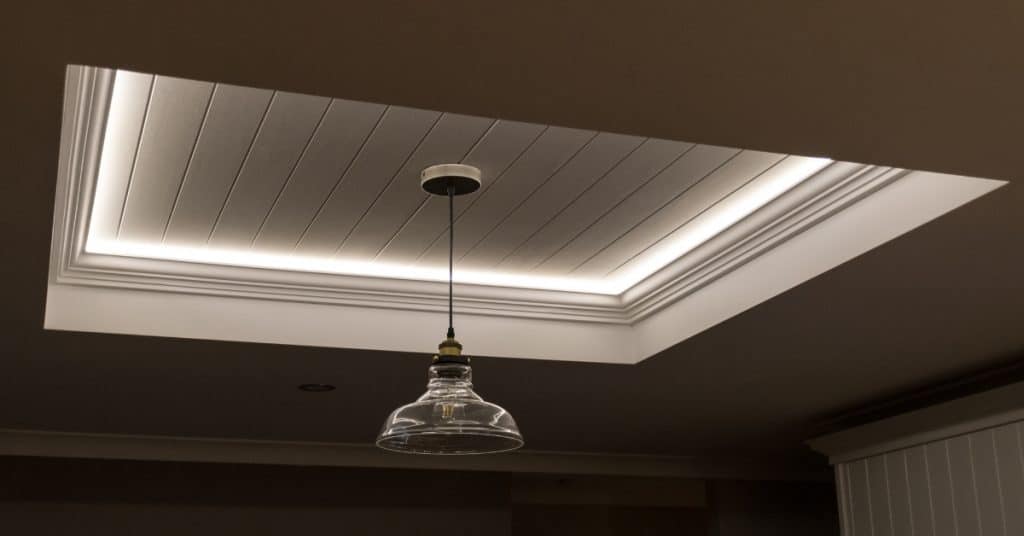
Accent light: Light used to highlight art, fireplaces, built ins, or architectural details.
A smart layout combines these layers so the room feels balanced. For example, in a living room we might rely on recessed fixtures for ambient light, then add accent cans aimed at a fireplace and task cans over a reading chair.
If you want a deeper jump into how recessed light affects mood and function, we walk through beam angles, fixture types, and spacing in more detail in our guide on how to design your recessed lighting layout.
What this really means is that there is no single “X feet apart“ rule that works in every room. Your ceiling height, paint color, furniture layout, and even your age and eyesight all affect the right plan. That is why a professional layout always starts with how you live in the space, not just where the joists are.
Key Factors Professionals Consider Before Planning A Layout
Before we ever mark a ceiling for recessed lights, we walk the room with you. Here are the main factors we look at and why they matter.
Ceiling height and room size
The taller the ceiling, the farther light has to travel. That affects:
How many fixtures you need
How strong each light should be
How wide the beam angle should be
For example, an 8 foot ceiling might use smaller cans with tighter spacing, while a vaulted ceiling often needs fewer fixtures with wider beams but higher output.
Room function and traffic flow
We ask questions like:
Where do you usually sit, cook, read, or work in this room?
Where do kids play or do assignments?
Which parts of the room are rarely used?
This lets us aim task lighting exactly where you need it and avoid shining lights directly into your eyes when you are seated.
Surface colors and finishes
Light bounces. Dark cabinets, wood ceilings, or deep wall colors absorb more light. Glossy countertops can create glare.
We may increase the number of lights or adjust the brightness in darker rooms. In kitchens with shiny stone tops, we often adjust angles to avoid bright reflections. Our article on electrical safety and lighting upgrades explains how smarter lighting can also improve safety, not just style.
Existing wiring and panel capacity
A perfect layout on paper still has to work with your home’s electrical system. As licensed electricians in New Jersey, we always check:
Circuit capacity and panel condition
Location of joists and existing runs
Any older or outdated wiring that needs attention first
Once we understand your room and your goals, we choose the layout pattern that will give you even light and minimal glare.
Perimeter layout
We place lights in a ring around the edges of the room, usually a bit in from the walls. This works well when:
You want to wash light down the walls to make a room feel larger
You have built ins or wall art you would like to highlight
You plan to use lamps or a chandelier for central light
Perimeter layouts are excellent in living rooms and bedrooms where softer, indirect light feels more comfortable.
Grid layout
This is a more uniform pattern, with lights spaced in a simple grid across the ceiling. We use grids when:
You need very even brightness across the whole area
The room is large or multi use, like a finished basement
There is no single “center” but you still want balance
In basements, we often combine a grid with dedicated task lights over game tables or desks. Our basement finishing wiring services frequently include recessed lighting grids tied to multiple switch zones so you can control different areas independently.
Task focused rows
In kitchens, offices, and laundry rooms, we line recessed lights in rows directly over work zones.
Typical examples:
A row over the sink and main counters
A separate row centered over the island
A row along a built in desk or craft table
This puts light where you need it most and prevents your body from casting shadows while you work.
Accent and wall wash layouts
Accent layouts do not necessarily light the whole room. Instead, we place lights to:
Room By Room Recommendations For Recessed Lighting Layouts
Every room in your home has its own job. The best recessed lighting layout respects that.
Kitchen
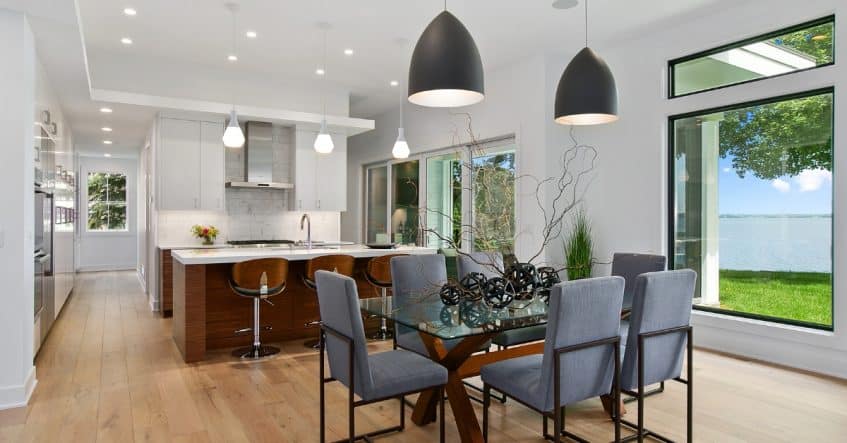
Kitchens are where layout mistakes show up fast. We focus on task lighting first, then fill in ambient light.
Common plan:
Rows of cans centered over countertops, not down the middle of the room
Dedicated fixtures over the sink and island
Options for under cabinet lighting to reduce shadows
We aim for overlapping beams so you do not work in your own shadow. If you do a lot of cooking or have darker cabinets, we will usually add a bit more light and tie it to dimmers for flexibility.
Living room or family room
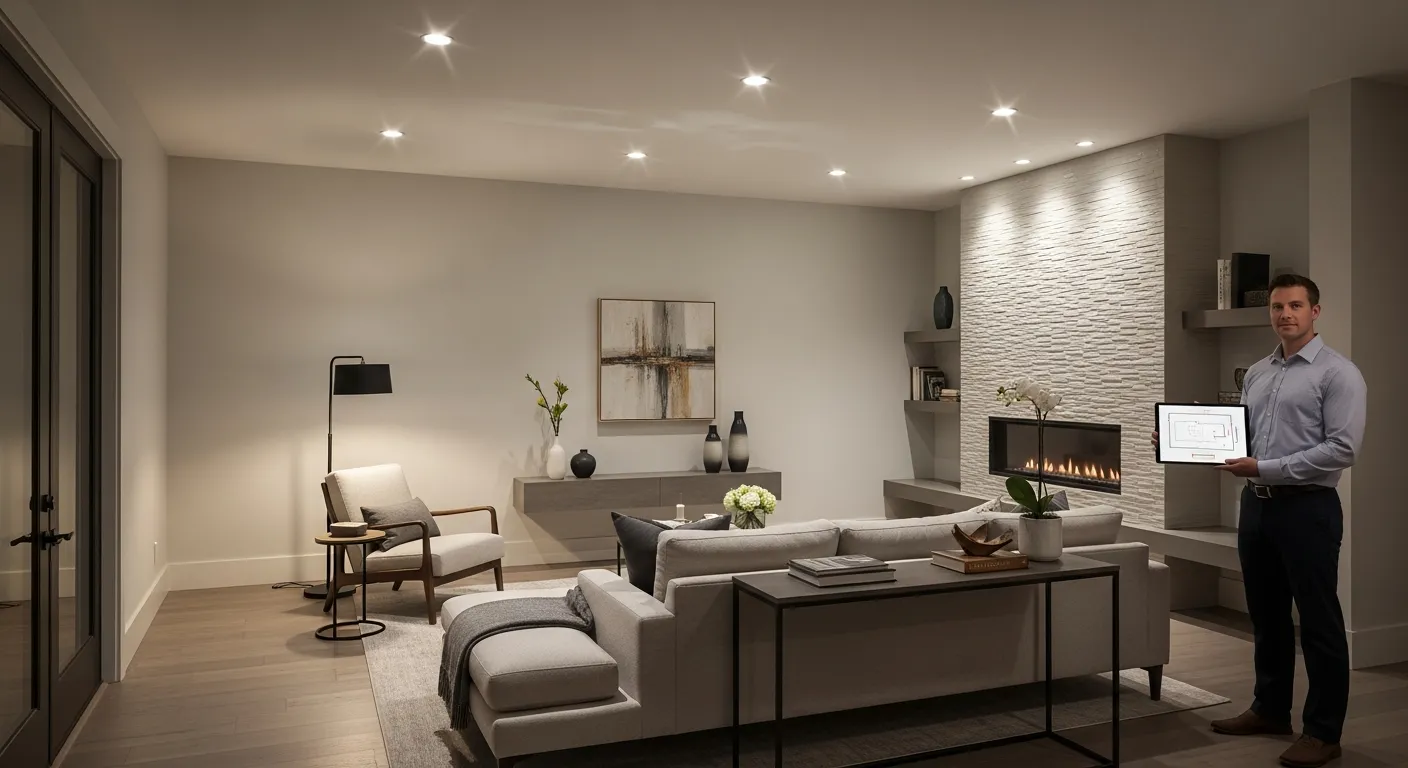
In living rooms, flexibility is the goal. You might be watching TV one night and hosting guests the next.
Our typical approach:
Perimeter layout around the seating area
A few accent cans aimed at the fireplace, TV wall, or art
Separate switch zones so you can dim or turn off lights while watching TV
In bedrooms, harsh overhead light can feel uncomfortable. We usually recommend:
A soft perimeter layout that keeps light off the bed area
Task lights near reading chairs or a desk
Dimmers as a must have, not a luxury
We rarely center lights directly over pillows. That way you can relax under softer light, then bring up brightness only when you are organizing or cleaning.
Bathroom
Bathrooms need clear, flattering light, especially around mirrors.
We typically combine:
Vanity lighting near eye level for faces
One or two recessed lights for general brightness
Careful aiming to avoid shadows under the eyes or chin
In larger baths, we may add a separate can near the shower. For ventilation and moisture control, many South Jersey homeowners pair lighting work with bathroom fan installation.
Hallways and entries
These are often overlooked, but good recessed lighting makes your home feel more inviting and safer.
Our usual plan:
Evenly spaced fixtures down the center of the hall
Slightly tighter spacing in long or windowless halls
Optional accent lights for artwork or family photos
If you are not sure where to start, our broader guide to the importance of lighting in your home is a good way to think about how each room should feel before we ever touch a wire.
Why A Professional Recessed Lighting Plan Beats DIY Every Time
We understand the temptation to buy a box of recessed cans at the home store and start cutting holes. The problem is that with lighting, mistakes are literally built into your ceiling.
Here is why a professional plan is nearly always worth it.
Safety and code compliance
Recessed lighting involves more than drilling a hole and connecting a couple of wires. We have to account for:
Existing wiring conditions and any aluminum or outdated wiring
Circuit loading so you do not create overloads
Insulation contact, fire safety, and local code requirements
Online rules of thumb are a starting point, not a complete plan. We bring tape measures, light meters when needed, and years of experience from projects across Burlington and Camden Counties.
We can look at a room and quickly see:
Where you will have shadows or hot spots
How future furniture changes might affect lighting
Which areas deserve separate dimmers or switch zones
That saves you from living with an odd, uneven layout or paying twice to fix it.
Cleaner finishes and less damage
Every extra hole in your drywall is another patch and paint job. We plan runs and placements to minimize cutting and to keep fixtures aligned and professional looking.
In short, DIY recessed lighting can look acceptable at a glance, but a professional plan looks right at every time of day and from every angle.
Ready To Get The Perfect Recessed Lighting Layout For Your Home?
If you are constantly fighting glare, dim corners, or the feeling that your rooms never look quite “finished,“ your recessed lighting layout is probably the culprit, not your bulbs.
We help homeowners in Burlington County, Camden County, and across South Jersey design and install recessed lighting that fits the way they actually live in their homes. From tight kitchens in older row homes to open concept family rooms in newer builds, we create layouts that layer ambient, task, and accent light into one clean, cohesive plan.
Instead of guessing at spacing or fixture types, we handle the design, safety checks, installation, and finishing so you end up with a bright, comfortable, and efficient home.
How To Prepare For Your Professional Recessed Lighting Consultation
To make your consultation as productive as possible, it helps to think through a few questions ahead of time:
Which rooms feel too dark or too harsh right now?
Where do you cook, read, work, or do hobbies most often?
Are you planning any other electrical upgrades, like a panel upgrade, EV charger, or generator?
When you are ready to move from ideas to a real plan, our licensed electricians can review your current system, walk your rooms with you, and map out a recessed lighting layout tailored to your home.
The best layout for recessed lighting layers ambient, task, and accent light so each room feels balanced, comfortable, and glare-free.
A professional recessed lighting layout always starts with how you use the space, factoring in ceiling height, room size, surface colors, and traffic patterns rather than relying on a one-size-fits-all spacing rule.
Different recessed lighting layout patterns—perimeter, grid, task-focused rows, and accent or wall wash—serve specific purposes and are chosen based on the room’s function and focal points.
Room-by-room planning is essential: kitchens prioritize task rows over counters and islands, living rooms benefit from perimeter and accent lighting, bedrooms need softer perimeter light with dimmers, and baths require careful coordination of vanity and ceiling lighting.
A professionally designed recessed lighting layout outperforms DIY by ensuring electrical safety, code compliance, minimal drywall damage, and clean, future-proof lighting control zones.
Frequently Asked Questions About Recessed Lighting Layouts
What is the best layout for recessed lighting in a typical living room?
The best layout for recessed lighting in a living room usually combines a soft perimeter layout for ambient light with a few accent cans aimed at a fireplace, TV wall, or artwork. Separate dimmer or switch zones let you switch between bright entertaining light and cozy movie-night lighting.
How do I figure out the best layout for recessed lighting in my kitchen?
In kitchens, start with task lighting, not the room center. Run rows of recessed lights over countertops, the sink, and island so you don’t work in your own shadow. Then fill in ambient light as needed and add under-cabinet lighting for darker surfaces or detailed food-prep tasks.
What factors should I consider before planning a recessed lighting layout?
A smart recessed lighting layout considers ceiling height, room size, how you use the space, furniture placement, surface colors, and glare from glossy finishes. Professionals also check wiring, circuit capacity, and joist locations to ensure the plan is both visually effective and safe for your electrical system.
How far apart should recessed lights be spaced on the ceiling?
There is no universal spacing rule because ideal placement depends on ceiling height, beam angle, fixture output, and room finishes. As a rough starting point, many designers space lights at about half the ceiling height in feet (for example, 4 feet apart on an 8-foot ceiling), then refine from there.
Is it better to DIY or hire a professional for a recessed lighting layout and installation?
Hiring a professional is usually best for recessed lighting. Electricians account for circuit loading, insulation contact, and code requirements, and they can predict shadows, hot spots, and future furniture changes. That reduces drywall damage, avoids overloads, and delivers a balanced layout that looks right from every angle.