Do you need to add wiring for appliances? Remember to hire a licensed electrician to install the appropriate dedicated outlet. A master electrician in New Jersey can provide electrical wiring for appliance installations, including dishwashers, microwaves, refrigerators, and other kitchen staples. Trying to install the outlets yourself or getting an unlicensed contractor to do it can put you and your family at risk. We have served clients in New Jersey since 2011 and invite you to contact us today for all your electrical needs.
Choose DK Electrical Solutions, owned by a master electrician, to install dedicated outlets with the amps needed to operate essential kitchen appliances.
If you buy a new kitchen appliance that requires a dedicated circuit, you will need an electrician to put in a new outlet box. A dedicated circuit has its own circuit breaker and is used for a single appliance. This line does not support any other kitchen equipment and supplies the extra energy needed by your new appliance.
Adding dedicated circuits can prevent overloads that trip the circuit breakers. Typically, kitchens have 20-amp dedicated circuits, each of which supplies power to one countertop outlet. However, larger appliances may require higher amps.
There are two types of dedicated circuits:
20-Amp: Kitchen outlets run on 20-amp dedicated circuits. You can plug in coffee makers, toaster ovens, and blenders without overloading your electrical system.
30-50 Amp: Some appliances, such as clothes dryers and ovens, require a lot of power. A master electrician can install a new outlet box and complete the wiring for appliances that run on 30-50 amps. These double pole circuit breakers can prevent the appliance from drawing too much power.
Why Do You Need Dedicated Circuits?
Dedicated circuits protect your home and family. Without a dedicated circuit, appliances can draw excessive amounts of electricity, which can blow a fuse or cause a fire. It’s important to hire a knowledgeable, experienced electrician to install the proper wire size and amps in order to meet local ordinances and maintain safety.
What Appliances Require a Dedicated Circuit?
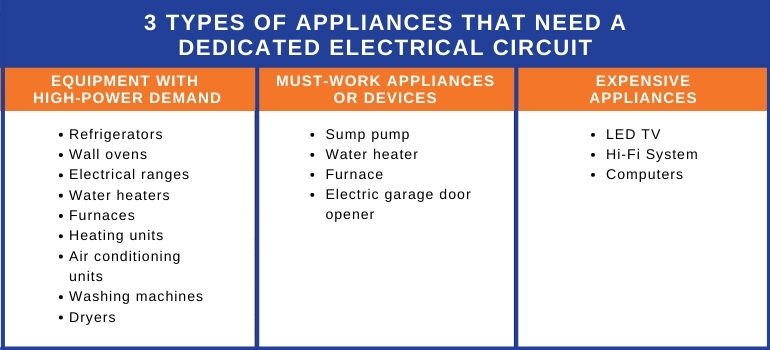
Although local electrical codes vary, the National Electrical Code specifies that large appliances must have separate, dedicated circuits. Our talented electricians can complete wiring for appliances, such as the following:
Refrigerators
Electric Ranges
Large Microwaves
Freezers
Wall Ovens
Toaster Ovens
Dishwashers
Garbage Disposals
Washers
Dryers
Heating and Air Conditioning
Water Heaters
Why Choose DK Electrical Solutions for Wiring for Appliances?
DK Electrical Solutions offers electrical wiring for an appliance installed by a master electrician. Instead of giving estimates over the phone, we come to your home to provide an accurate quote. To simplify the process, we provide a flat rate for the job instead of charging you by the hour.
We serve commercial and residential property owners in New Jersey and our work comes with a satisfaction guarantee on each job. You can hire a licensed, bonded master electrician at an affordable rate and take advantage of special offers on our website.
Contact DK Electrical Solutions Today
DK Electrical Solutions delivers affordable electrical wiring for appliance installation. Note that this service doesn’t include the installation of the appliance. Let us ensure that your kitchen outlets have dedicated circuits to eliminate the risk of a fire or a blown fuse.
There’s nothing quite like the cozy warmth and comfort of stepping onto a warm floor in your home on cold New Jersey mornings. A floor radiant heat system from DK Electrical Solutions will eliminate cold floors and keep your feet and your entire home warm all winter.
New Jersey’s best floor radiant heating technology is a cost-effective, state-of-the-art under-floor solution to unevenly heated living spaces.
The best possible comfort and convenience in home heating is a silent and invisible system that evenly distributes heat without moving air. Conventional electric and gas heating systems blow dust and other allergens from vent ducts and make mechanical and blower noises and radiators make clattering noises. None of these traditional home heating systems heat spaces ideally evenly. Floor radiant heating produces silent, evenly distributed, highly efficient heating.
What Is Floor Radiant Heating?
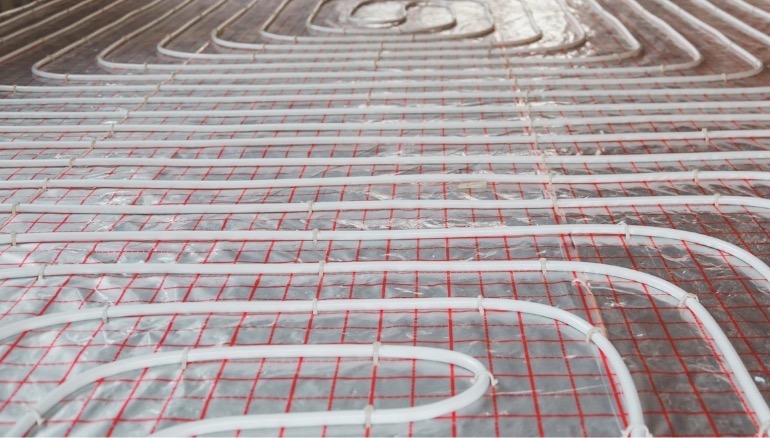
Radiant floor heating systems are designed to warm floors, or walls, or ceilings with special electrical conduits called electric resistance cables. Underfloor heating systems featuring single-wire electrical installations and electrical floor heating mats offer two under-floor heating alternatives to the intricate plumbing pipe systems of hydronic floor heating.
An electric floor radiant heating system is installed under the floor, and it radiates heat upward from the floor in one room or throughout the entire house. It enables homeowners to have heat directly emanating upward wherever you are in your home.
What Are the Advantages of a Floor Radiant Heating System?
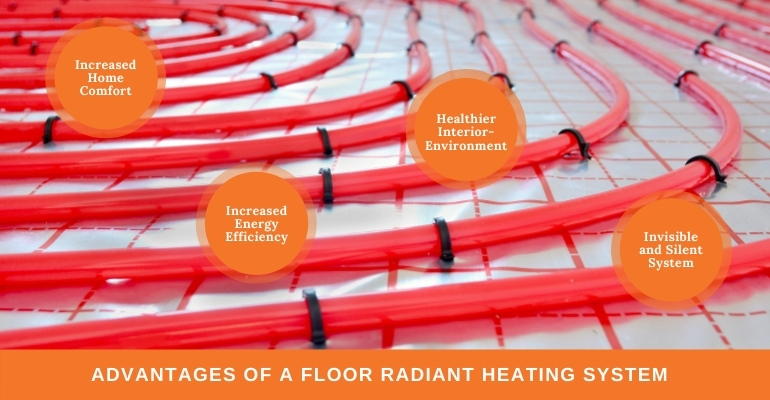
There are many major benefits of using underfloor radiant heating, including:
Increased Home Comfort — One of the most significant benefits of floor radiant heating is the superior comfort throughout the home. Radiant heat is where you want it, providing an even, consistent temperature, without cold spots.
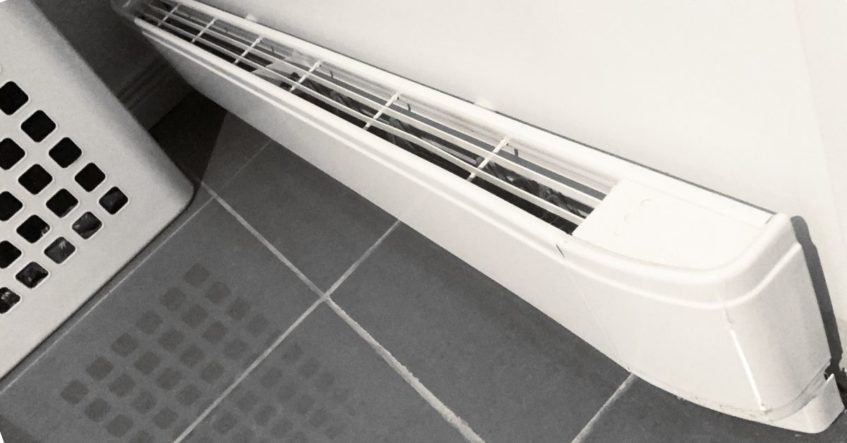
Increased Energy Efficiency – Furnaces, boilers, and baseboard systems all lose significant amounts of heat. A radiant heating system loses much less heat and uses considerably less energy than traditional forced-air systems. That means significant savings on energy costs with underfloor heating.
Healthier Interior-Environment – Under-floor radiant heating does not move air in order to work. So, unlike with traditional heating systems, no dust or other allergens are being blown around in the interior air.
Invisible and Silent System – Also unlike traditional heating systems, you don’t see or hear your floor radiant heating system operating. It does not make any noise(s), and it does not have vents, ductwork, radiators, or plumbing pipes in your living space.
How Do Electric Floor Radiant Heating Systems Work?
The popular mat system consists of electrical resistance cables embedded in thin mats. There are also single-wire electric heat systems for underfloor installation. Either the mats or the single cable systems are installed under the flooring. Virtually any flooring material type is compatible with either of these electric under-floor radiant heating systems. Either can be run by a connected thermostat controller.
The electric heating mats make ideal retrofit heating applications in residential remodeling projects that involve replacing existing heating systems. Some underfloor heating mats are certified for safe use in bathroom showers.
Which Flooring Types Can Be Installed over an Electrical Floor Heating System?
Electrical floor radiant heating can be installed under virtually any type of commonly used flooring material. Underfloor electrical heating equipment functions ideally under hardwood, tile, carpet, concrete, slate, vinyl, engineered wood, laminate, stone, or any other kind of flooring material.
Answers to Some Frequently Asked Questions about Radiant Floor Heating:
Can an Electrical Under-floor Heating System Be Installed without Tearing Out Flooring?
Some electrical heating mats are designed for stapling between floor joists, so the radiant heat equipment can be installed by working below the flooring, without removing the flooring. Then, Insulation is installed beneath the heat mats, to help prevent heat loss downward.
Can the Entire House Be Sufficiently Heated with Radiant Floor Heating Only?
Modern electric floor radiant heating systems have more than enough capacity to heat your whole house. Under-floor systems are very effective at eliminating cold spots because they heat evenly across the entire floor and from floor to ceiling. (Depending on your house’s heat-load requirements and heat loss issues, supplementary heating may be required, as with most types of traditional heating systems.)
How Long Can a Radiant Heating System Be Expected to Last?
With proper installation by certified professionals, and as long as flooring remains intact, an under-floor radiant heating system can be expected to deliver decades of excellent service.
How Does Radiant Floor Heating Cost Compare to Conventional Heating?
Floor radiant heating costs more upfront for equipment and installation than traditional forced-air heating systems, but it saves monthly heating costs because of its greater efficiency. There are no ducts leaking air and no wasted energy.
Installing an Underfloor Heating System
Without the necessary professional expertise and state-of-the-art tools, installation mistakes are much more likely to result in a system that does not work properly, or one that could actually be hazardous to your home and property and its occupants.
So, even if you have a track record of successful DIY home improvement projects, keep in mind that installing a floor radiant heating system is a highly complex undertaking involving various unique challenges. Ensuring proper installation requires a professional.
The installation process should be performed by Master electricians who have also obtained the years of apprenticeship and professional experience necessary to qualify them to install the system at the level of quality that homeowners should expect.
Why Choose DK Electrical Solutions, INC.?
DK’s licensed certified Master-level electricians are among the industry’s most knowledgeable teams of floor radiant heating systems in greater New Jersey and the surrounding New England region. Our experienced installers and top-quality equipment and materials enable us to provide our 100% satisfaction guarantee with complete confidence.
We take great care to perform meticulous installation of every under-floor radiant heating system we install. We’re committed to completing all installation work in a timely manner. We stand by our upfront price. So, our customers can enjoy the peace of mind that comes with knowing that there will be no sticker shock or other surprises. DK offers our customers:
A fully licensed, bonded, and insured team of Master Electricians
Financing for larger jobs (0% interest for qualified customers)
Availability 24/7
100% customer satisfaction guarantee
For More Information about Floor Radiant Heating
DK Master Electricians have been providing electrical installation and service for our customers throughout New Jersey for nearly a decade. We can accommodate any size installation or service project.
For more information about under-floor radiant heating installation, or to schedule an appointment for your estimate, feel free to contact DK Electrical Solutions, Southampton, NJ anytime by calling (609) 796-4177. Or, fill our online appointment request form, for a quick response.
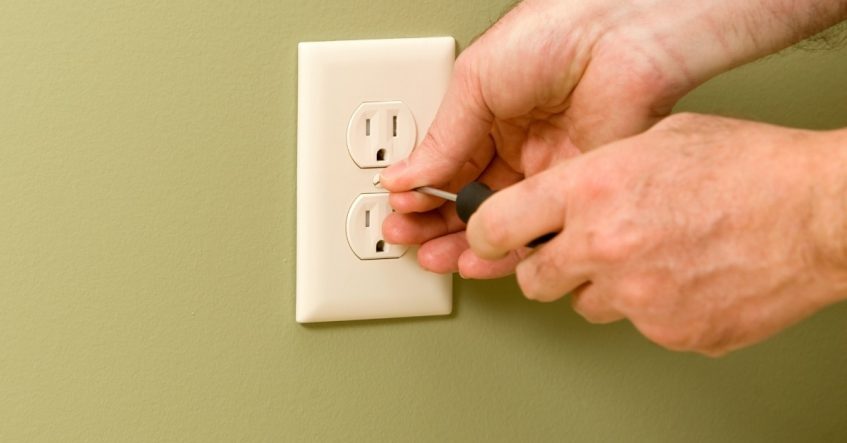
What should you look for when you need an electrical outlet box installation? By choosing master electricians in New Jersey, you can rest assured that electrical work is done in your shopping center, corporate campus, and other commercial buildings that meet local codes. When it comes to electrical outlet repair master electricians bring years of experience and verifiable credentials regarding their expertise. DK Electrical Solutions is a master electrician owned and operated business that has served NJ clients since 2011.
If you need an electrical outlet box installation, our electricians provide residential and commercial electric outlet installation. Contact us for an estimate!
Why Should You Invest in Modern Electrical Outlet Installation?
Depending on the age of your building, your current outlets might not meet modern electrical codes. While you might be grandfathered into antiquated electrical codes, you can increase the productivity and safety of your business by partnering with our master electrician for electrical outlet box installation at your commercial property.
Investing in electrical installation at your home can increase the value of your house, especially if you upgrade your electrical system at the same time. Modern outlets provide flexible, safe power and can resolve many problems by providing a reliable energy supply.
What Types of Electrical Outlets Does DK Electrical Solutions Install?
Our master electricians are trained to install all types of modern electrical outlets. We can even help you choose outlets that add value and functionality to your home or business.
Here are a few common outlet types to give you an idea of the variety available:
Ground Fault Circuit Interrupter Outlets: GFCIs sense abnormal electrical flow and block electricity to prevent shocks.
Arc Fault Circuit Interrupter Outlets: AFCIs prevent power arcs that can cause fires.
Smart Outlets: If you have smart devices at home, smart outlets make it easy to install smart doorbells and other gadgets that help you create a more convenient, comfortable, and secure home.
USB Outlets: USB outlets make it easy to charge modern electronic devices such as tablets and phones.
Switched Outlets: Switched outlets combine a power receptacle and power switch and one unit. Whatever you plug into this outlet turns on and off when you flip the switch.
Tamper-Resistant Outlets/Child-Proof Outlets: If you have small children at home, tamper-resistant outlets can prevent shocks. They work better than plastic covers and give you peace of mind that your children are safer.
We also install a variety of 15- to 50-amp outlets to meet your needs.
Hire DK Electrical Solutions To have a master electrician install your electrical outlets. We provide upfront pricing that doesn’t change once we start the job. You get one price instead of an hourly rate that can bust your budget.
Our residential and commercial customers in New Jersey love our limited warranty and satisfaction guarantee. we would love to hear from you to discuss your electrical service needs. When we come to your location, you benefit from the services of licensed, bonded master electricians, and we also feature special offers!
Contact DK Electrical Solutions Today
Electrical outlet box installation may not be as expensive as you think. Replace aging outlets that put your home or business at risk. We offer flexible financing for electrical outlet installation and all electrical services performed for our customers in New Jersey. Call (609) 796-4177 to get a consultation today.
If you are planning to get an electrical outlet box installed for your home or business, call DK Electrical Solutions, a top-rated Electrical outlet box installer in NJ.
Are you planning to install a swimming pool or hot tub at your South Jersey home? Before you can begin to make the most of your new backyard features, you’ll need to make sure that your electrical wiring is up to the task and with the help of an experienced master electrician, you can enjoy your pool or hot tub with peace of mind.
Licensed and Insured Master Electrician Serving Burlington County, New Jersey.
At DK Electrical Solutions we can confidently assure you of help regarding the installation services for a new pool, spa, or hot tub or an inspection of your existing outdoor amenities. You can relax and concentrate on enjoying the luxury while we take care of the designing and testing of your outdoor electric systems.
What is the Minimum Voltage and Amperage Required for a Tot Tub Circuit?
The minimum voltage and amperage requirement for a hot tub circuit is 240v (240 volts) and at least a 50 amp double pole breaker. For proper operation of the hot tub, it is essential that the voltage and amperage requirements are met. It is important to seek professional help when installing or upgrading a hot tub circuit to ensure proper safety protocols are followed.
GFCI Outlets for Hot Tub Wiring
GFCI (ground fault circuit interrupter) outlets are required for pool and hot tub wiring. GFCI outlets act as safety devices, cutting off the power when detecting a current leak. This helps prevent electrical shock and other safety risks associated with hot tubs. GFCI outlets should be installed by a certified master electrician for optimal safety and performance.
ddd
Pool and Hot Tub Electrical Wiring Services in Burlington County, New Jersey
Besides a license and insurance, you want a technician with plenty of experience wiring pools and hot tubs. Whether you need installation, repair, maintenance, or replacement services in the South Jersey area, we can get the job done quickly at an affordable price.
Our superior skills make the following residential electrical services a no-hassle experience for our clients in New Jersey.
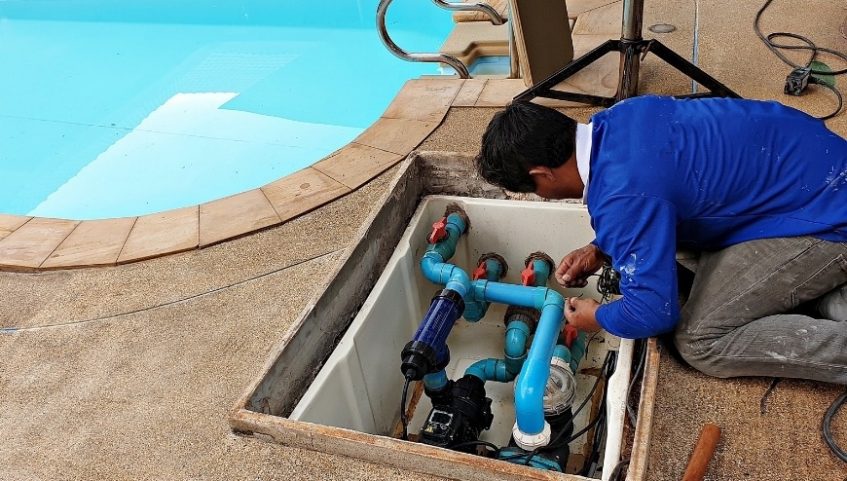
Pool Pump Installation
Hot tubs and swimming pools both require a pump. The pump removes stagnant water and filters in fresh water for an enhanced swimming or therapeutic experience. If you have just installed a new pool or hot tub, DK Electrical Solutions can install the pump and make sure the wiring is compatible with your existing electrical system.
Troubleshooting Hot Tub and Swimming Pool Wiring
Some problems are difficult to diagnose and require the attention of a professional. Call our electricians to inspect your system and validate whether your outdoor fixtures may still be under warranty. Once we find the problem, we can provide an economical quote to get your pool or hot tub ready for use again.
Call DK ELectrical Solutions before you install a new pool or hot tub for the best results. We can help you determine the voltage needed and whether you need any electrical system updates prior to installing your outdoor fixtures. For example, large swimming pools require more electricity to operate the pump then a small hot tub.
Most homes come equipped with 100-amp service, which is sufficient for these appliances. However, if you live in an older home, that doesn’t mean you can’t have a hot pool or hot tub. Talked to us about what it would take to update your electrical system to make your dream of a hot tub, spa, or pool ownership possible.
Electrical Issues
If your outdoor electrical system seems a little haywire, avoid using your swimming pool or hot tub until the wiring has been inspected by one of our professional electricians. We handle issues with outdoor lighting, pumps, pump engines, and additional electrical services.
Wiring Pool and Hot Tub LightingThat means if you aren’t satisfied, we aren’t done.
Certified, Licensed Electricians who Know Their Way Around a Hot Tub or Pool
Don’t put off a hot tub or pool installation because you don’t have a reliable electrician. It’s also a bad idea to handle try DIY electrical work, especially when water is involved.
Brighten Up Your Evenings with Beautiful, Secure Outdoor and Landscape Lighting
You’ve worked hard to make your home or property beautiful-why let it disappear at night?
At DK Electrical Solutions, our team of certified electricians brings decades of experience designing and installing landscape lighting near you. We design and install safe, elegant, and energy-efficient outdoor lighting systems that showcase your property’s best features, enhance curb appeal, and improve functionality after dark.
From front walkways to backyard patios and commercial properties, we help South Jersey property owners light up the night, without overcomplicating the process.
📍 Proudly serving Burlington County, Camden County, and surrounding New Jersey towns.
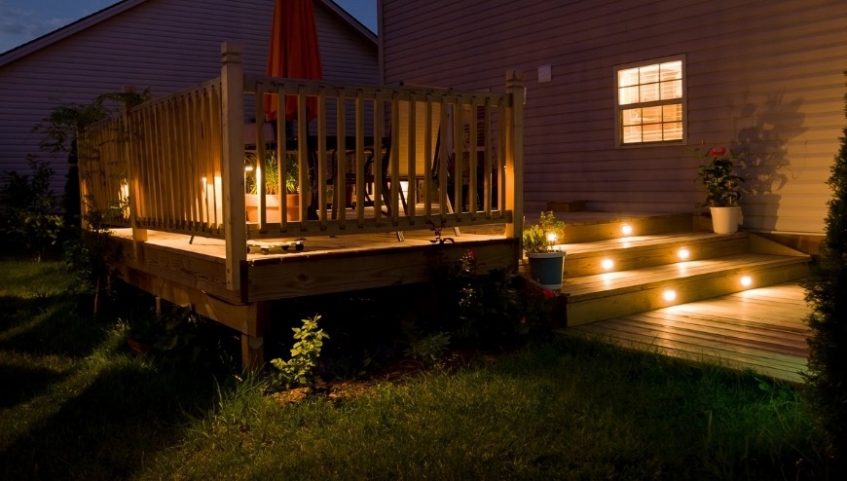
Pathway lights, garden spotlights, deck lights, flood lights, and smart LED systems are the most common. Each type highlights a different feature of your home, from safety pathways to showcasing landscaping.
LED lights last longer, consume less power, and deliver brighter, more consistent illumination than halogen or incandescent options. They also require less maintenance.
Yes. With today’s technology, systems can be timer-based, motion-activated, or fully integrated into your smart home. Learn more in our guide to smart lighting installation.
Absolutely. Motion-activated and flood lighting can deter intruders and help surveillance systems capture clearer images. For seasonal safety tips, see our article on avoiding common wintertime electrical problems.
Yes, most low-voltage systems require a transformer to safely reduce household voltage down to levels compatible with outdoor fixtures. Our electricians ensure your system is properly matched and installed for efficiency and safety.
Professional-grade outdoor fixtures are designed to withstand rain, snow, and seasonal temperature changes. We install only durable, weather-rated products that last in South Jersey conditions.
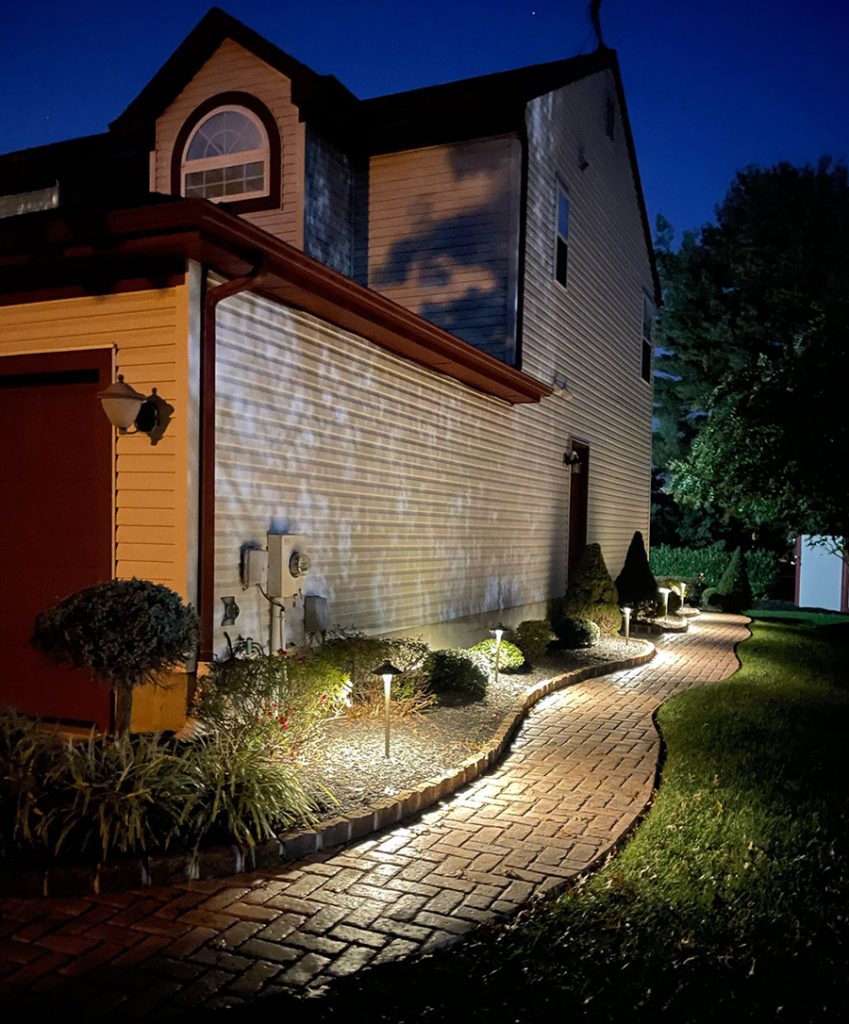
We recommend staggering lights along walkways rather than placing them in a straight line. This reduces dark spots, prevents glare, and creates a more natural, inviting look.
Maintenance usually involves cleaning fixtures, replacing bulbs when needed, checking wiring, and adjusting positions as landscaping changes. Our team also offers ongoing service plans to keep your system working like new.
In many cases, yes. As long as your transformer and wiring can handle the additional load, we can expand your system with new fixtures to cover more of your property.
Service Area
We proudly serve Burlington County, Camden County, and nearby towns including:
Reliable Outdoor Lighting Installation for South Jersey Homes & Businesses
At DK Electrical Solutions, we’ve built our reputation on safe, efficient, and beautiful outdoor lighting that lasts. Whether you want to upgrade your home’s curb appeal, add security, or design a custom landscape system, our licensed electricians are here to help.
Power your EV with confidence. At DK Electrical Solutions, we specialize in EV charger installation for homes and businesses across South Jersey, including Burlington County and Camden County, NJ. Whether you’ve just purchased an electric vehicle or need to upgrade your current setup, our Certified Master Electricians deliver expert service you can trust.
We’ll help you calculate the cost of installing an EV charging station—and even guide you toward local rebates like Charge Up New Jersey to save up to $1,000+.
Financing is available to make your EV charger installation budget-friendly.
DK Electrical Solutions Inc. is happy to help make your generator installation, panel service upgrades, whole-house wiring job, or other electrical services affordable with our easy financing options!
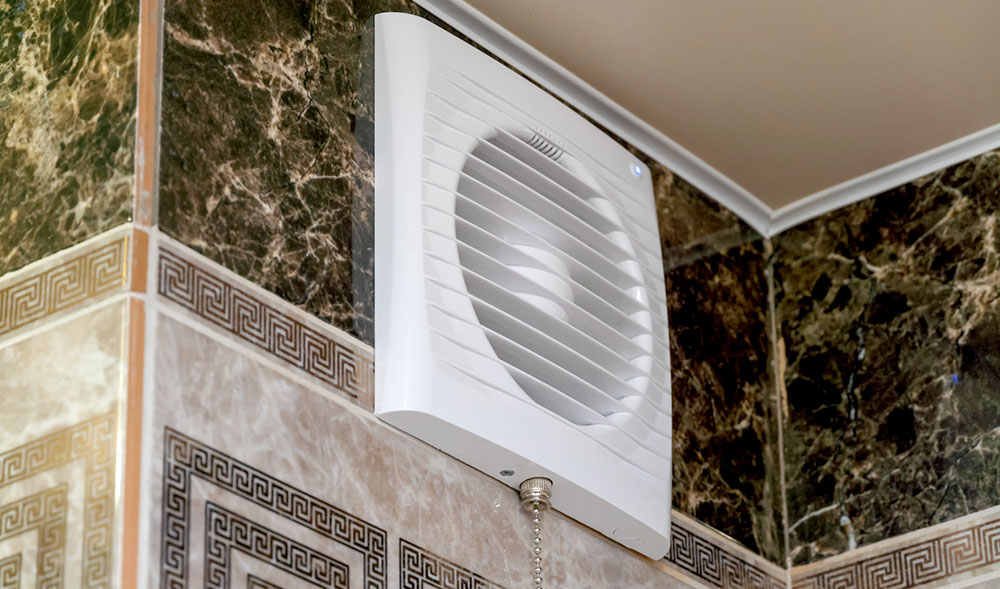
Do you need a ceiling, attic or exhaust fan installed or updated in New Jersey? Call the experts at DK Electrical Solutions for an stimate. Whether you need the wiring fixed or a new ceiling fan installed, there’s nothing our team can’t handle.
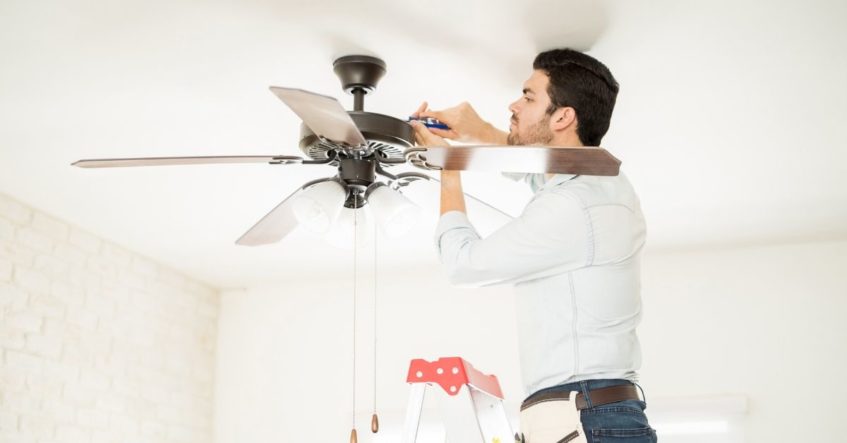
Our New Jersey master electricians can help install or replace ceiling fans, attic fans, or exhaust fans.
During hot summer days, ceiling fans are excellent to keep the room temperatures cool. If a ceiling fan is not installed properly, it can become a dangerous hazard. We will handle everything, so you can sit back and enjoy your ceiling fan’s fresh air.
4 Reasons Why You Should Have a Licensed Electrician Install a Ceiling Fan
A ceiling fan is a good investment in your home. It improves airflow for greater comfort and combats moisture that promotes mold and deterioration of paint, fixtures, and your personal possessions. A great ceiling fan also complements your home’s style. It can be tempting to try installing a ceiling fan yourself. However, here are four reasons why you should reconsider that idea and have a licensed electrician perform your ceiling fan installation:
Professionals know how to prevent ceiling damage. A ceiling fan often requires cutting a larger hole in the ceiling or cutting a new hole. Cutting holes in the ceiling in DIY projects sometimes causes damage that is expensive to repair. Licensed electricians are professionals in this area of home improvement and will manage to enlarge or cut new holes without unexpected damage.
Wiring fixtures without experience can be dangerous. One of the most dangerous areas of DIY home improvement is in working with electrical wiring. Installing a ceiling fan or a lighting fixture or appliance that necessitates rewiring or connecting to existing residential wiring requires experience, to ensure immediate and long-term safety. A professional electrician is thoroughly trained in safe wiring practices, recognizes safety issues, and performs every action safely.
Licensed electricians are ceiling box experts. Very often, homeowners attempting to install a ceiling fan are unaware that different types of fan configurations require different kinds of ceiling electrical boxes. Installing the wrong electrical box can cause the fan not to be as securely installed as it needs to be for safety and long-term operability. A licensed electrician has all necessary parts and installation materials and supplies readily on hand, to ensure that your new fan functions safely and through all the years of its life expectancy.
Professional electrical work adds value to your home. DIY electrical work does not inspire the same level of confidence in home buyers that having electrical projects, like a ceiling or attic fan installation, or a whole house fan installation completed by professionals does. In fact, knowing a home has been modified with DIY electrical projects can worry many buyers. Especially if you’re planning multiple electrical installations inside and outside your home, noting that the work was all professionally done is a positive point with prospective buyers.
For the greatest practical benefit and enjoyment from your new ceiling fan and for the long-term safety of your home and its occupants, always call a licensed electrician for equipment installations.
Exhaust Fan Installation, and Replacement in New Jersey
An exhaust fan is one of the important accessories that every home should have. The exhaust fans pull the excess moisture and unwanted smells of a particular room. Exhaust fans can often be found in the bathroom, kitchen, laundry room, attic, garage, and basement.
Why Do You Need Exhaust Fans?
The main function of the exhaust fans is to pull out any excess moisture or smells from different rooms in the house. This means that they provide ventilation in your house to prevent chemical fumes from building up, and also remove any contaminants that can be dangerous to breathe in. Exhaust fans cool down areas that get hot in your house. The exhaust fans vent the hot air outdoors, thereby reducing the temperature of your house even when you are not using the air conditioner. Exhaust fans are responsible for removing the excess moisture that could damage your home. When hot water cools down and condenses on walls, or any other surfaces, mold can grow. The exhaust fans prevent the growth of mold in your home by ensuring that all the excess moisture in your house has been removed.
Exhaust Fans for Attic
The attic is another place in your house that will benefit from an exhaust fans. Exhaust fans help ensure your attic remains moisture-free. When the attic has excess moisture, the moisture can damage the roof. When you have an attic fan, the life of your roof will be extended. The exhaust fans also provide ventilation in the attic and the house at large, contributing to reduced power costs.
An exhaust fan is one of the must-have things in your bathroom. Although homes require some levels of moisture, the bathroom is very susceptible to excess moisture. To create a better environment in the bathroom, an exhaust fan should be installed. They prevent the growth of mold and mildew that damage the surfaces of the bathroom, towels, and curtains. This is because when you have an exhaust fan, it eliminates any moisture in the bathroom preventing the growth of mildew and mold. Finally, exhaust fans in the bathroom eliminate unpleasant odors.
Whatever your Exhaust Fan Installation or service needs are, DK Electrical Solutions has you covered! Contact us for an on-site estimate on residential or commercial fan installation!
Installing a ceiling fan is less difficult if the space above the ceiling is readily accessible through the attic. There are reasonably straightforward approaches to ceiling fan installation, even if there is no attic above it. However, this kind of fan installation requires making new wiring connections and adding an electrical switch, which requires professional expertise. You should contact a licensed electrician who provides ceiling fan installation service to ensure your ceiling fan’s proper connections and safe operation.
Measure the length and width of your room, and use those measurements to calculate the square feet of the space.
Then measure the height of the room.
Then check the area dimensions of the fan you want. Make sure that the diameter of the fan is appropriate for the square footage of the room.
Next, check the fan’s downrod length and compare it to the room’s height measurement to ensure that the fan will not hang too low from the ceiling. Allow a minimum of 10 to 12 inches clearance between the ceiling and the fan blades for sufficient airflow.
To avoid accidentally voiding your warranty coverage due to faulty installation, have your new ceiling fan installation performed by a licensed electrician.
The primary difference between outdoor and indoor ceiling fans is the kinds of materials used to manufacture them. Indoor ceiling fans are not built to withstand the moisture and winds to which a fan is exposed during outdoor use. Outdoor fans are constructed from more durable materials that can last over time through winds and other weather. Outdoor fans also need more robust fan motors for cooling open outdoor living spaces.
To ensure proper connections and safe operation, have your new ceiling fan installation completed by a licensed electrician.
If your ceiling fan is making a rattling noise, the cause may be a loose screw in the fan blade assembly. Check all the fan blades at the attachments to the fan motor housing, and tighten any that are loose. All the screws should be tight — but avoid over-tightening.
Another potential cause of noise from a ceiling fan is a loose wire connector inside the switch housing. If you suspect that this is the problem, you should not attempt to repair it yourself. You may need to replace the fan or have it repaired by a qualified professional.
If there is noise or any other problem with your ceiling fan that cannot be corrected without opening the cover on the motor, or the switch, or other mechanical or electrical parts of a ceiling fan, check your warranty. If the fan is no longer covered under warranty, then you are advised to replace the fan or take it to a licensed professional.
Ceiling fans usually use around 10 to 80 watts. Many use about 20 to 50 watts. Larger ceiling fan models that are not necessarily designed for energy efficiency may use 75 watts or even more. In any of these cases, using a fan consumes much less electricity than running an air conditioner. This is because fans do not refrigerate the air. A fan works by causing a “wind-chill effect” on the skin, making you feel cooler.
So, using a ceiling fan is a great way to stay cool and comfortable in your home while saving energy costs. You might even find that you can avoid running your air conditioner through a large percentage of the hot weather period of the year.
The basic operation of an attic fan is pushing stale hot air out of the attic by pulling outside air into the space. This process of forcing air circulation in and out of the space is an efficient way to vent the attic and replace hot stagnant inside air with fresh outdoor air to cool the attic.
Installing an attic fan facilitates the exchange of inside and outside air serves to assist a home’s HVAC system in cooling the living spaces below the attic. It enables the whole-house cooling system to be more effective while reducing strain on the equipment.
An attic fan is designed to serve as an advanced ventilation system for the attic space. The fan is installed in the attic ceiling, to circulate air through the area at the very top of the house, where the air is hottest and most stagnant. It moves hot air out of the attic while drawing in air from outside the house.
The exchange of indoor and outdoor air prevents stagnant hot air from remaining suspended between your roof and your living space in the rooms below. This air circulation system helps your HVAC work less and deliver better results in heating and cooling the home.
If you have an HVAC system, an attic fan circulates the hottest air in your home, helping the HVAC system perform better while using less electricity and while preserving the life of the equipment. So, any home with an HVAC system should have an assistive attic fan to support it.
If you do not have an HVAC system, attic fan installation can be even more important. The attic fan drives out the hottest air at the highest area of the house and draws in fresh air. This process is essential for maintaining an exchange of indoor and outdoor air. This air exchange helps protect the attic, roof, and ceilings from exposure to a more extreme build-up of heat and humidity.
Because the process involves electrical connections, you should work with a licensed electrician who performs ceiling fan installation service to put in an attic fan. The attic fan installation process may be a little faster if your attic has an existing gable vent and you plan to replace it with an attic fan. The raw opening may need to be enlarged a little to fit the automatic shutter for the new attic fan. But, if the vent is large enough, it may already be compatible with the attic fan and you might not even need to replace it with a new vent. From this point, the rest of the installation requires no alterations to the structure.
Yes. In many homes, the upstairs rooms are never as cool as the downstairs living spaces. This is often partly due to sweltering heat in the attic emanating down into second-story rooms below. With appropriate air-sealing insulation in the attic and throughout the home, installing an attic fan will help prevent heat from stagnating above the living spaces. This aids the HVAC system in keeping the upstairs rooms cooler and more comfortable.
Pushing out the extremely hot air covering the top of your rooms can help make the entire home cooler in hot weather. Plus, the attic fan helps keep attic insulation dry throughout the winter, which also helps reduce the strain on the HVAC, saving it from continuously overworking during the summer.
An attic fan reduces the burden on your home’s HVAC system. Using an attic fan saves your HVAC system from struggling against the extreme heat that stagnates in the attic. That enables your HVAC system to cool with greater energy efficiency. This means that the cooling equipment does not have to work as hard but cools better than it did when it was working harder without the attic fan! It also means that with the attic fan supplementing the cooling system for your home, you can reduce your cost for air conditioning while maintaining a more comfortable indoor temperature throughout your home.
There are numerous factors that should be weighed to determine the size of the exhaust fan you need for your bathroom. But, generally, you can start with the simple method below and then increase the fan size based on factors specific to your particular room, its location, windows, construction type, water outlets, water pressure, types of use, number of users, and multiple other considerations.
You can start with this general process for determining fan size based just on the number of cubic feet the fan must accommodate:
Multiply your bathroom’s length x width to calculate the square footage of the space.
Multiply the room’s ceiling height x the square footage total from your equation above to calculate the total cubic square feet of your room.
Multiply the total cubic square feet by 1.1 (which is 110%) to calculate the total amount of cubic feet per minute (CFM) of ventilation you need in the space.
Check the manufacturer’s information to ensure that the exhaust fan has a UL rating for installation over a shower or bathtub on a circuit that has a GFCI. If the fan is rated for use in those locations, you can safely install it above the shower or tub.
Exhaust fan units that feature heating units are not designed for installation and use over a shower or bathtub.
Read your product specifications and installation and usage information for details on safe locations for installation.
Yes, you need to confirm the insulation contact (IC) rating for your ceiling fan. You can find this important information on the product specification sheet for your fan model.
Not necessarily. Some exhaust fans are also suitable for installation in a wall, depending on the depth of the wall cavity. Usually, wood frame construction is with 2" x 4" wall studs. That means the space for fan installation is limited to a 4-inch depth. So, you will need to select a fan for wall installation that will fit within the depth of your wall. Be sure to mount the exhaust fan as high on the wall as possible. An exhaust fan that features lights and/or a heating unit should not be mounted in a wall.
Ideally, your bathroom exhaust fan should be installed either in the shower, if it is rated for shower installation, or as close to the shower or bathtub as possible. This puts the fan where it can be most effective in drawing moist hot rising air directly from the spot with the densest concentration of it. The recommended location for exhaust fan installation in a powder room is directly above the toilet.
Only exhaust fans that are designed to be used with a fan speed control mechanism can be safely operated with that technology. Follow the manufacturer’s instructions for your fan model specifications to ensure that the fan is designed for use with the speed control device that you want to use.
If there is no reference to use with such a speed control in the owner’s manual for the fan, contact the manufacturer’s customer service department for guidance.
Inspect the fan’s grill (vented front cover) for dust buildup in air vent openings and clean as needed. Check the air duct for damp dust or debris obstructing airflow. Check the vent outlet at the roof for blockage from bird nests, tree leaves, etc.
Here are a couple of possible causes of this problem that are easy to remedy:
The mounting screws that hold the motor in place may be loose. Turn off the electricity to the fan unit at the switch and the breaker box. Remove the fan grill and check all the screws to ensure they are well tightened around the entire motor.
Another possible cause of a loud fan is the fan blade scraping against its housing. Turn off the power to the fan unit at the switch and the breaker box. Remove the fan grill and inspect to ensure that the fan blade is securely installed on the fan shaft.
A noisy exhaust fan can indicate a more serious safety issue. So, if neither of the above potential solutions eliminates the noise, contact the manufacturer for guidance on this critical electrical fire safety issue.
Why Choose DK Electrical Solutions?
When you need to install fans in New Jersey, contact DK Electrical Solutions. Our company is licensed, insured, and we provide on-site estimates. We offer same-day service for many minor installations. Plus, you’ll never be surprised by your bill because we stick behind our up-front pricing. We are master-level electricians who will get the work done right the first time around.
Master Electrician in South Jersey
At DK Electrical Solutions, we provide high-quality work and excellent customer service. We care about your safety and comfort. Our electricians at DK Electrical Solutions are highly skilled, licensed, and trained to handle electrical installation or replacement. Every month we offer coupons to our customers and you could use them at any time. We also offer financing options for large electrical jobs with 0% interest for qualified customers.
Call DK Electrical Solutions in South Jersey at (609) 796-4177, or contact us online, to schedule an appointment to have your new ceiling fan or other electrical fixtures professionally installed.
Protect Your Home or Business with Reliable Backup Power
Do you need reliable generator installation? DK Electrical Solutions offers fast, affordable generator installation for homes in the greater Southampton, NJ, area. Our technicians take the time to provide quality work but finish in an efficient, professional manner.
Whatever your generator needs are, DK Electrical Solutions has you covered! Contact us for an on-site estimate on residential or commercial generator installation!
Since 2011, DK Electrical Solutions has been the trusted name in high-quality, affordable electrical repair and installation services throughout Burlington and Camden Counties, NJ. Our generator installation services ensure your home or business remains safe, energy efficient, and prepared for unexpected power outages. With our team of Certified Master Electricians, you can rest assured that every installation is done with expertise, precision, and the highest safety standards.
With an increased demand on electricity and electronic equipment in the modern world, many homes and small businesses want the layer of security that having an on-site Generator. DK Electrical Solutions proven team will keep your home or business up and running even in inclement weather and when mother nature wants to shut you down.
What is a Backup Power Generator?
A backup power generator is an essential investment to safeguard your property against power outages. Whether you need a standby generator for your home or a robust system for your business, our solutions ensure uninterrupted power, enhanced safety, and reduced downtime during emergencies. Explore the differences between standby, portable, and whole-house generators and find the right fit for your needs.
Top Brands & Equipment
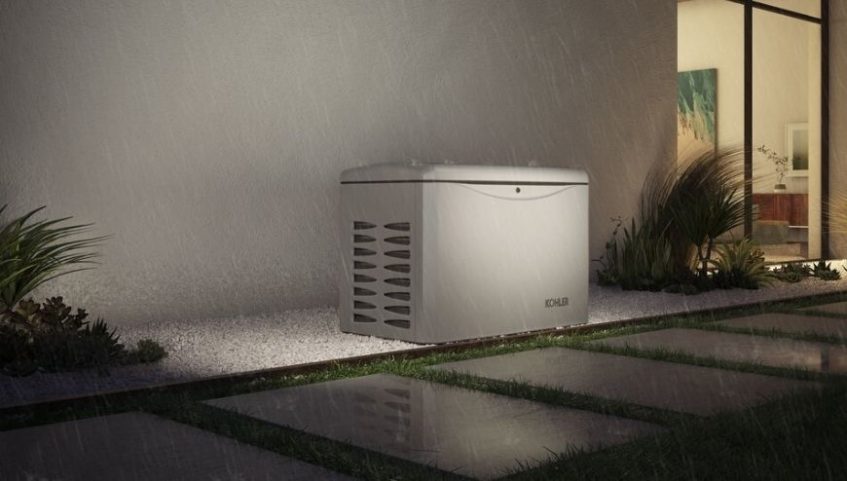
We work exclusively with high-quality, trusted brands to guarantee superior performance and durability. Whether it’s a Kohler, Generac, or another industry-leading brand, our equipment comes with warranties and is installed to meet all local codes and standards.
Why Kohler?
When it comes time to replace your standby generator, we recommend Kohler, a brand that stands by its products. Here is a brief description of the two main types of generators.
Standby Generator Installation
Standby generators can prevent power interruptions and start automatically. Power by propane or natural gas, they are quieter than portable generators and can run everything in your home or business. The higher price tag if standby generators include convenience and reliability. If you want to wire them into your subpanel, call DK Electrical Solutions to ensure that the installation goes smoothly.
Here are just a few reasons that make Kohler the best brand in the business:
Quality: superior commercial-grade and residential products
Reliability: Kohler generators take a few seconds to start up so that your business or home does not lose power.
Single-Source Responsibility:Kohler generators, switchgear, and transfer switches Come with best-in-class warranties to protect your investment.
Integrity: This well-known brand is known for reliability in all situations, whether you’re powering a hospital, data center, your home, or small business.
Kohler thoroughly tests Each generator in parts before they ship it to your home or business.
Our Generator Installation Process
We follow a proven, step-by-step process to deliver exceptional generator installation services:
1. Consultation & Assessment
Our experts begin with a thorough evaluation of your property’s power needs. We assess your electrical system, calculate the appropriate generator sizing, and recommend the best models to suit your requirements.
2. Generator Sizing & Selection
Choosing the right generator is critical. We guide you through various options—from top brands like Kohler and Generac—to ensure you receive an efficient, reliable, and long-lasting solution.
3. Professional Installation
Our team performs a safe, code-compliant installation. We handle everything from wiring to final setup, ensuring minimal disruption and maximum performance.
4. Post-Installation Support & Maintenance
After installation, we offer ongoing support, routine maintenance, and safety inspections to keep your generator in optimal condition.
Benefits of Professional Generator Installation
Safety & Reliability: Proper installation minimizes risks and ensures your system performs reliably during outages.
Energy Efficiency & Cost Savings: A well-installed generator helps optimize energy use and can lead to lower utility bills.
Long-Term Value: Enhance your property’s value while reducing future repair costs.
Peace of Mind: Enjoy uninterrupted power and the confidence that your electrical system is in capable hands.
How to Prepare for Your Generator Installation
To ensure a smooth installation process, here are some tips to get started:
Clear the Installation Area: Ensure that the designated installation area is free of obstructions.
Schedule a Consultation: Book an on-site assessment so our experts can determine your generator sizing and placement.
Plan Ahead: Consider your energy needs and any specific requirements you might have, such as additional outlets or integration with your home automation systems.
Financing & Promotions
At DK Electrical Solutions, we understand that investing in a generator is a significant decision. That’s why we offer flexible financing options and regularly update our promotions to make our services more affordable. Look for current promotions on our coupons page and inquire about financing during your consultation.
Frequently Asked Questions About Generator Installation
Installing larger generators, especially whole home generators designed to power multiple systems in a house during an electrical outage, requires a licensed electrician. Professional installation is necessary to avoid inadvertently voiding your warranty for the generator due to errors. Having your generator Installation performed by a licensed master electrician also ensures proper connections and safe operation of your generator.
If you plan to power your entire house with a whole home generator, you will need enough wattage to supply multiple major electrical appliances. A large, high-quality, dual-fuel 10,000-watt generator is a good option for many homes.
If you want a generator for your travel trailer, a 3,000-watt inverter generator can probably power everything you want to use, including the air conditioner, refrigerator, TV, lights, and more.
We will help you calculate the generator wattage to get a general estimate of how much wattage you need for your home or recreational purposes.
The cost of a large generator for emergency home power use varies widely, depending upon the type and size of the generator. Generator installation costs also vary, depending on the location of the generator, the amount of electrical wiring needed, and other factors, plus any annual maintenance and repair allowances that may be included.
On a monthly basis, depending on the current price for natural gas, the cost to run your emergency generator in exercise mode should only cost a few dollars per month. Running the generator during power outages, at a 50% load can be expected to cost about $20-$30 per day for gas. This is, of course, much less than the price of renting a hotel room or replacing ruined food, and much more convenient!
Air-cooled generators emit a noise volume of approximately 66 decibels at a distance of around 20 feet. This means that you can carry on a typical conversation between a couple of people at normal speaking volume while standing beside an air-cooled generator that is running. Today’s state-of-the-art large generators are designed for use in residential neighborhoods. Generator installation must be properly performed to ensure safety and optimum performance.
You may need to have your gas meter upgraded to accommodate a large whole-house generator. Part of having a generator installed by a DK master electrician is a site survey that includes a Gas Inventory Report. After recording the model of your present gas meter, an inventory will be taken of all gas-fueled appliances in your home. Typically, when a gas meter upgrade is required by the local gas company, the process is simple and only minimal cost is charged to the homeowner.
A building permit will probably be required to install a generator at your New Jersey home. Our DK master electrician will coordinate with the building department for your municipality to determine the correct interpretation of the local building code for your particular jurisdiction. Often, our master electricians have already completed generator installations in the area and are therefore already familiar with your Building Inspector’s requirements.
We will obtain all necessary state and local permits as well as HOA approvals if needed. We will attend any variance meetings with your HOA, if necessary. Everything involved in your generator installation, from the quote to the completion of the project will be handled for you by our master electrician.
The average lifespan of an emergency power generator is about 15 years operating in typical standby conditions. Like any other kind of machine, the generator will age and may need maintenance as it nears the end of its life expectancy.
Note that air-cooled emergency power generators are not intended for use as continuous power sources around the clock 365 days per year. However, your DK master electricians can design the right solution to power off-grid homes. We can also design an application to operate with existing solar PV arrays and battery banks, where solar equipment manufacturer and installer warranties permit.
Why Choose DK Electrical Solutions for Residential Standby Generator Installation in South Jersey?
We install and replace a high volume of generators and can provide faster service and more comprehensive solutions than our competitors. We handle everything from installation to inspections to replacing your nonworking generator.
As a Platinum Kohler Dealer, DK handles the permit process installation that becomes necessary while you have your generator. With warranties on our work and generous financing terms, we do all we can to accommodate our clients and it shows in our customer service and completed work.
Call DK Electrical Solutions Inc, NJ at (609) 796-4177, or contact us online to schedule a site survey and estimate for your emergency generator installation or other electrical needs.