A Burning Smell From a Brand-New Light Switch? Here’s What That Means
You just installed a new light switch. Everything looks clean and works fine. Then you notice it. A faint burning smell. Maybe it smells like melting plastic. Maybe it’s stronger than that.
Your first thought is usually the right one. Something isn’t right.
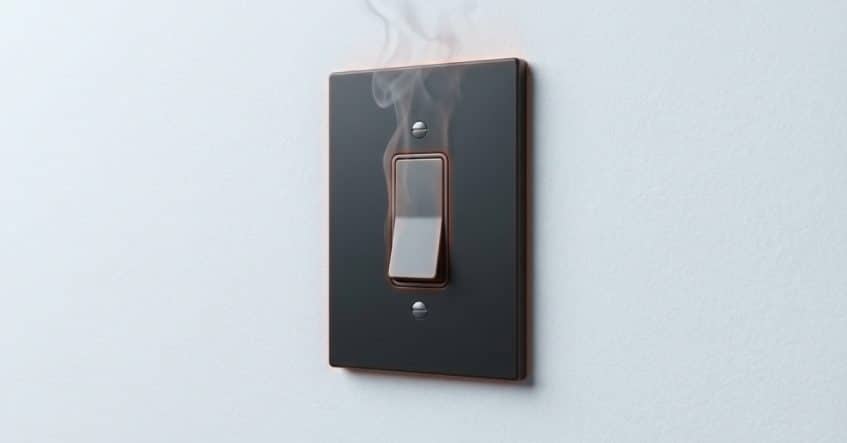
If your newly installed light switch smells like burning plastic, you should not ignore it. Electrical burning smells are among the earliest warning signs of a wiring issue, a loose connection, or an overload. In some cases, it’s minor. In other cases, it’s a real light-switch hazard that can cause damage or a fire.
Let’s break down what causes a burning smell in a new light switch, how to troubleshoot safely, and when it’s time to call a professional.
What We’ll Cover:
Why Does My Newly Installed Light Switch Smell Like Burning Plastic?
Here’s the direct answer: a burning smell from a new light switch usually means heat is building up where it shouldn’t.
That heat comes from one of a few common causes.
1. Loose Wire Connections
This is the most common issue we see.
If a wire is not tightly secured to the terminal screw, electricity can arc across the gap. That arcing creates heat. Heat melts insulation. Melted insulation smells like burning plastic.
Even a slightly loose connection can create this problem.
Signs of a loose connection:
- The smell gets stronger when the light is on
- The switch feels warm to the touch
- Occasional flickering
If you are already noticing flickering along with odor, this guide on why your lights flicker and what it means can help you connect the dots.
This is not something to ignore.
2. Incorrect Wiring
If the line and load wires are reversed, or if the wrong type of switch was installed, the internal components can overheat.
This happens often with:
- Three-way switches
- Dimmer switches
- Smart switches
- Upgrading older wiring systems
An incorrect configuration can create resistance. Resistance creates heat. Heat creates that burning smell that homeowners describe when using a new light switch.
In older homes, outdated wiring can also play a role. If you suspect aging conductors behind the wall, review how to identify outdated wiring in your home:
3. Overloaded Circuit
If the switch controls high-wattage lighting or multiple fixtures, and the switch rating is too low, it can overheat quickly.
For example:
- Installing a 15 amp switch on a 20 amp circuit
- Using a standard switch with high-wattage LED drivers
- Adding additional fixtures without upgrading the switch
The switch may technically work, but it will generate excess heat.
If overloads are a recurring issue in your home, it may be time to look at strategies to prevent electrical overloads in your property.
4. Poor Quality Switch Components
Not all switches are made the same.
Lower grade switches can:
- Use thinner internal contacts
- Have weaker terminal screws
- Use plastic that melts more easily
A cheap switch under load can start producing a new electrical installation smell within hours.
5. Damaged Insulation During Installation
If the wire insulation is nicked during stripping, the copper can be partially exposed. That can create arcing and heat.
Even a small gap in insulation can become a serious light switch hazard over time.
If your home contains older aluminum conductors, that risk increases. Learn more about whether aluminum wiring is a fire hazard.
Is a New Electrical Installation Smell Ever Normal?
This is a good question.
Sometimes, a very faint smell right after installation can be normal. Especially if:
- It’s a brand-new dimmer switch
- It’s a smart switch with internal electronics
- It fades within a few hours
Some switches have a light coating or manufacturing residue that burns off slightly during the first use.
But here’s the key difference.
A normal new electrical installation smell:
- Is very mild
- Disappears quickly
- Does not get stronger
- Comes with no heat or discoloration
A dangerous, electrical burning smell:
- Smells sharp or chemical
- Gets stronger when the lights are on
- Comes with warmth or buzzing
- Persists beyond the first day
If the smell lingers or intensifies, assume it is not normal.
If you are unsure how to evaluate the difference, professional electrical troubleshooting services can quickly pinpoint the cause.
Electrical Burning Smell Troubleshooting: What You Can Check Safely
Safety comes first.
Before touching anything, turn off the power at the breaker. Confirm the switch is dead with a voltage tester.
Here are safe troubleshooting steps.
Step 1: Remove the Switch Plate
Look for:
- Discoloration
- Melted plastic
- Darkened screws
- Burn marks
If you see any of these, stop. That switch needs replacement and inspection.
Step 2: Check for Warmth
Carefully touch the switch housing after briefly turning the power back on.
If it feels hot rather than slightly warm, that is a problem.
Switches should never feel hot.
Step 3: Confirm Wire Tightness
With power off again, gently check that:
- Terminal screws are tight
- No copper is exposed beyond the screw
- No insulation is pinched
Do not over-tighten, but ensure a solid connection.
Step 4: Verify Proper Switch Rating
Check the label on the switch.
- Is it rated for the circuit amperage?
- Is it rated for LED loads if using LED lighting?
- Is it compatible with the fixture type?
If unsure, this is where professional input matters.
Step 5: Smell Test After Reset
Once everything is reassembled, restore power and monitor for 10 to 15 minutes.
If the burning smell of a new light switch issue returns, stop using it.
Flip the breaker off and call a licensed electrician.
If you are dealing with multiple unexplained issues at once, this breakdown of top common electrical issues in your home can help you see the bigger picture.
Warning Signs: This Is a Serious Light Switch Hazard
Let’s be clear. Some situations move from nuisance to danger quickly.
Call for professional help immediately if you notice:
- Visible smoke
- Cracking or popping sounds
- The switch feels hot within seconds
- The lights flicker heavily
- Breaker trips repeatedly
- Burn marks inside the box
- Strong chemical or fishy smell
That last one matters. A fishy smell often indicates melting electrical insulation.
Electrical fires often start behind walls. By the time you see flames, the damage is already done.
If you ever face active flames or severe overheating, review the safest way to put out an electrical fire here:
Trust your instincts. If it smells wrong, it probably is.
Why DIY Installations Often Lead to Burning Smells
We see this often.
Homeowners follow a basic tutorial. The switch works. Everything seems fine. Then the smell starts.
Common DIY mistakes include:
- Backstabbing wires instead of using screw terminals
- Mixing aluminum and copper wiring without proper connectors
- Using the wrong gauge wire
- Not securing wires fully inside the box
- Overcrowding the electrical box
Backstab connections are especially common. These push-in connections are faster but less secure. Over time, they loosen and create heat.
What this really means is that the switch can still function while being unsafe.
Electricity does not forgive small mistakes.
If you are unsure whether to handle a repair yourself, consider the benefits of hiring a local licensed and certified electrician:
How Professional Installation Prevents This Problem
At DK Electrical Solutions, we have handled hundreds of switch replacements, lighting upgrades, and wiring corrections.
When we install a switch, we:
✔️ Verify circuit load before installation
✔️ Use proper torque on terminal screws
✔️ Confirm wire gauge and compatibility
✔️ Inspect the condition of the wiring inside the box
✔️ Ensure the box is not overfilled
✔️ Test for heat buildup under load
Small details matter.
A switch is a simple device, but it sits at the intersection of your home’s power flow. Any weakness there becomes a heat source.
Licensed electricians are trained to identify risks that are not obvious to the eye.
If you are planning additional lighting upgrades, you can explore our lighting installation and repair services for safer, professionally installed solutions.
When to Replace the Switch Immediately
If your newly installed light switch smells like burning plastic and you see any damage, replace it.
Do not attempt to reuse a switch that has overheated.
Heat weakens internal contacts. Even if it works today, it can fail later.
Replace immediately if:
- Plastic is warped
- Terminal screws are discolored
- Wires are brittle
- There is visible charring
In some cases, the wiring inside the wall may also need inspection.
That is especially true in older homes with aging insulation.
Could the Problem Be Inside the Wall?
Yes.
Sometimes the switch is not the real problem.
The smell could be coming from:
- A loose wire nut connection
- A failing splice inside the box
- Damaged insulation inside the wall
- An overloaded branch circuit
This is why troubleshooting a persistent electrical burning smell should include a full inspection.
The switch may simply be the first place you notice it.
Light Switch Hazard and Fire Risk: What the Data Shows
According to the National Fire Protection Association, electrical distribution and lighting equipment are among the leading causes of home fires.
Many of those fires start with:
- Faulty wiring
- Loose connections
- Overloaded circuits
A minor overheating issue can escalate into a serious problem if ignored.
The warning signs are often subtle at first. Smell is one of the earliest indicators.
That is why paying attention to a burning-smell new light-switch situation is smart, not paranoid.
For a broader look at protecting your home’s wiring, review these electrical safety and lighting upgrades:
A Quick Word About Smart and Dimmer Switches
Smart switches and dimmers naturally generate more heat than standard toggle switches.
However, they should never:
- Smell strongly
- Feel hot to the touch
- Cause buzzing
- Trip breakers
If your smart switch smells like burning plastic, compatibility is often the issue.
Possible causes include:
- No neutral wire where required
- Incompatible LED drivers
- Incorrect wiring configuration
These systems are more complex. Guesswork is not recommended.
If you are installing smart lighting, working with an expert in smart lighting installation can prevent these issues from the start:
When It’s Time to Call a Professional
Here’s the honest rule.
If you smell burning and you are not completely confident in diagnosing electrical systems, stop.
Shut off the power.
Have it inspected.
Electrical issues escalate quickly. A 30-minute inspection is cheaper than repairing fire damage.
If you need help evaluating a light switch hazard or any other wiring concern, you can explore our residential electrician services here:
Or request an inspection directly through our contact page:
Frequently Asked Questions
Because electrical connections can overheat without failing immediately. Loose wires create resistance and heat while still allowing current to flow. That is why the smell is a warning sign, not a sign of total failure.
No. Even a mild electrical burning smell should be investigated. It may seem small now, but overheating components weaken over time.
They can if the switch is not rated for LED loads or if there is a compatibility mismatch with a dimmer. Incorrect pairing increases heat.
If it is simply manufacturing residue, it should fade within a few hours. If it persists beyond the first day or intensifies, it is not normal.
Slight warmth under load can happen, especially with dimmers. It should never feel hot. Hot means excessive heat and a possible hazard.
If you are experienced and understand proper electrical safety procedures, possibly. If not, hire a licensed electrician. Electrical mistakes carry real risk.
Don’t Ignore the Smell. Protect Your Home the Right Way
If your newly installed light switch smells like burning plastic, treat it seriously.
It may be something simple like a loose connection. It may be a deeper wiring issue. Either way, heat inside a wall is not something you want to gamble with.
Address it early. Inspect it carefully. And when in doubt, bring in a professional who knows what to look for.
If you would like peace of mind, explore our residential electrical services or request a quick quote at DK Electrical Solutions for a safety check. It is a small step that can prevent a much larger problem.