Families in New Jersey without home backup power are advised to plan for managing winter electrical outages.
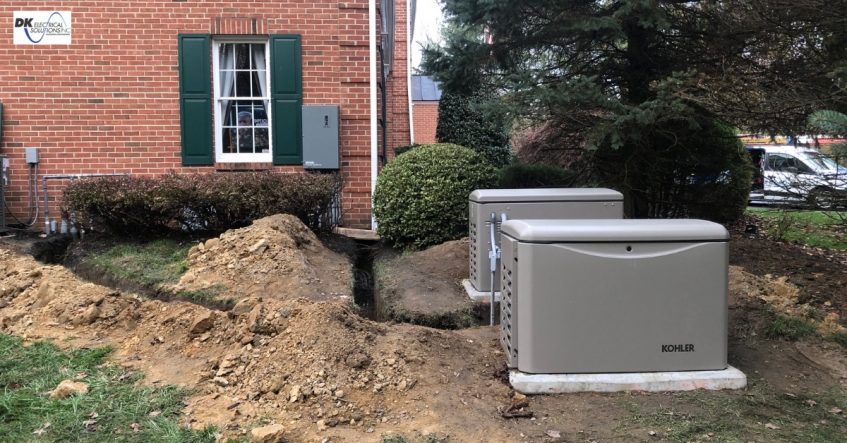
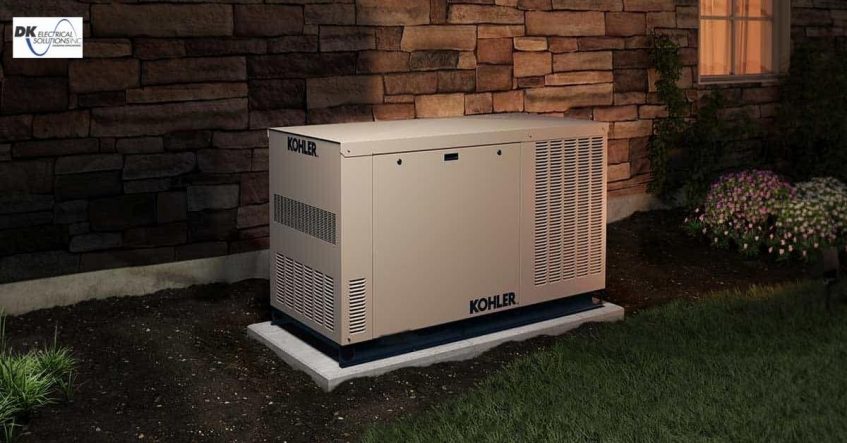
Electricity is so seamless and silent that we can forget we’re usually using it around the clock almost every day of our lives. So, it’s easy to mistakenly assume electricity will just always be there at the flip of a switch, no matter what occurs. But, of course, the power can go off at any time due to a utility company or public grid problem or an approaching storm. New Jersey residents should obtain a power generator for home use or prepare to manage their families’ needs without electricity. We’ll examine the options below.
You’re right to be concerned about flickering lights inside or around the exterior of your home. That may or may not be a problem you can safely ignore.
Lights flickering in houses frequently or persistently can indicate serious electrical problems that put homes and families at extreme risk of electrocution or house fires.
Whether it’s light bulbs flickering in the ceiling fixture or outdoor flicker light bulbs blinking during a storm, understanding the root cause is key to safety and peace of mind.
Below is a list of common causes of flickering lights in homes, along with suggested actions to ensure home safety.
Causes of Flickering Lights in One or More Rooms
If you’re seeing flickering in just one room or a few bulbs, it may be a small issue—or a sign of something more serious. Let’s look at common reasons your lights might flicker.
Types of Light Bulbs
Fluorescent bulbs may flicker when turned on in a cold room in winter or as the lights are powering up. To stop this, consider switching those to another kind of light bulb.
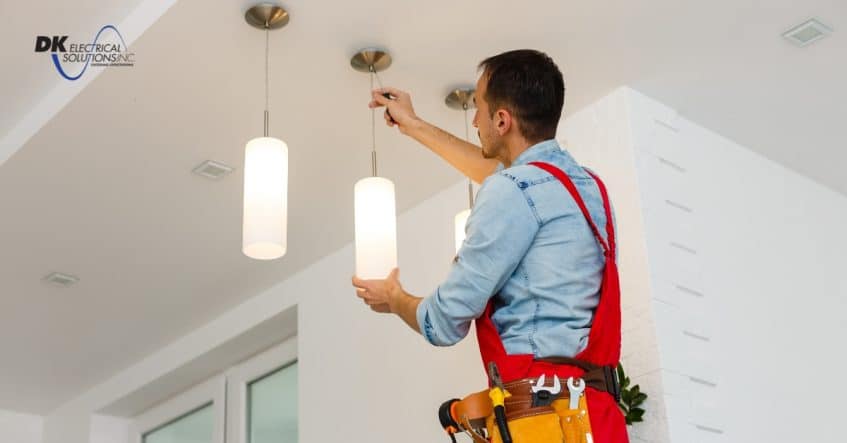
Another example is using LED light bulbs with dimmers designed for incandescent bulbs. Only use compatible dimmers with LED bulbs. Flickering LED light fixtures often stem from incompatible dimmer switches or faulty drivers.
Loose Light Bulb
Loose light bulbs that aren’t screwed into the sockets properly don’t get a steady supply of electricity.
To correct this simple problem, simply turn off the light and wait for the bulb to cool down. Then, screw in the bulb until it is snug in the socket.
If light bulbs keep flickering after you tighten them, the issue may be with the socket or underlying wiring—not the bulb itself.
Loose Connection
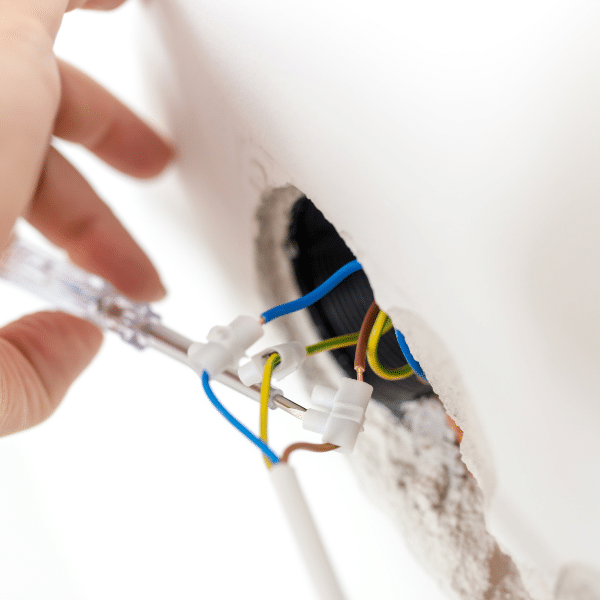
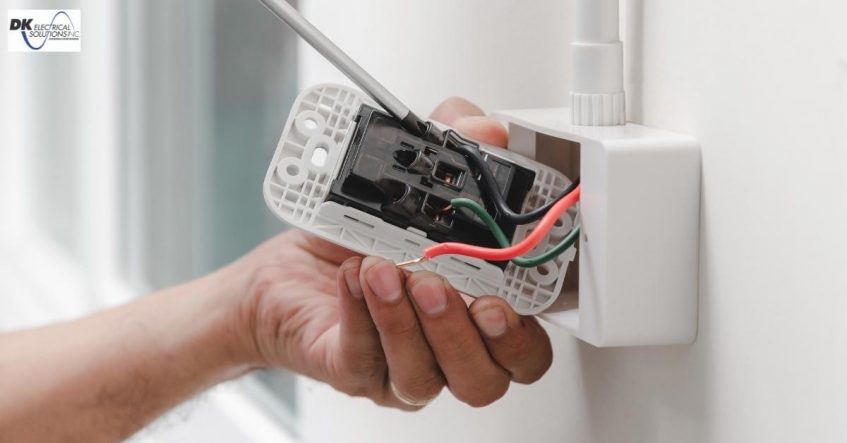
If flickering increases, loose wiring may be the cause. It may be due to incorrect light installation, outdated wiring, or worn-out wiring or connectors.
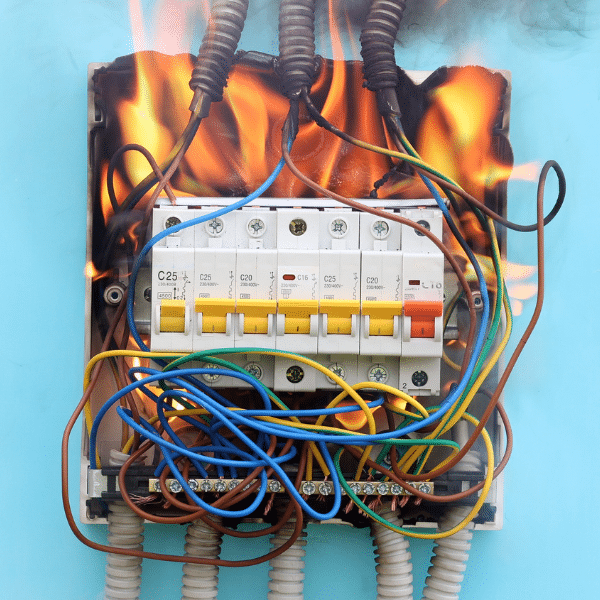
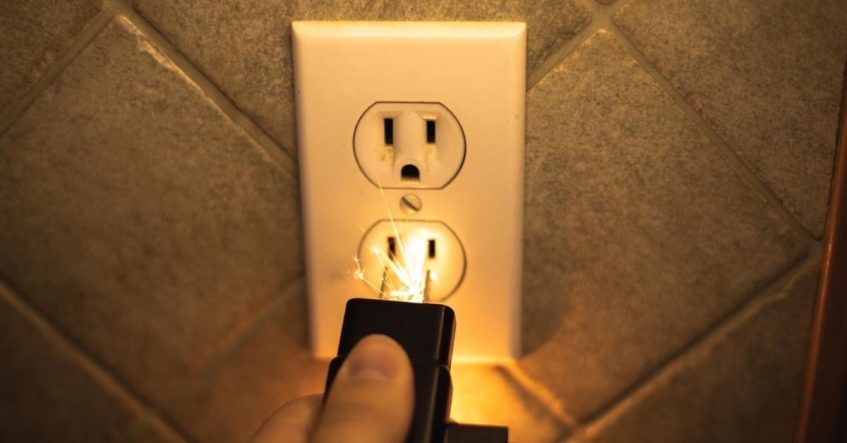
This may be a serious problem. Any loose electrical connection is a fire hazard. It may cause arcing and overheating.
⚠️ Call a certified electrician immediately if you suspect a wiring issue.
Overloaded Circuit
If your lights flicker when you turn on large appliances, an overloaded circuit may be the cause.
Appliances draw high amounts of electricity when starting up, which can briefly overload the circuit.
If the flickering persists for more than a few seconds or occurs frequently, you may need to upgrade the wiring or circuits in that part of your home.
Voltage Changes
The home voltage should be between 115–125 volts. Sudden drops or spikes can trigger flickering.
Signs of voltage fluctuation include:
Lights dimming or brightening without reason
Bulbs burning out quickly
Flickering during/after appliance use
Devices shutting off or malfunctioning
If any of these apply, a certified electrician should measure your voltage and diagnose the issue.
Lights Flickering in the Entire House
Frequent flickering throughout the home is typically more serious—and should be examined promptly by a licensed electrician.
Possible causes include:
Poorly connected or deteriorated wiring
Strong winds or storms causing power surges
Corroded electrical connectors
Loose service conductors inside the main panel
Breaker, switch, or meter faults
Inadequate grounding or bonding
💡 Whole-home flicker may signal fire risk or electrocution hazard. Do not ignore this.
Could the Power Company Be the Cause?
Why do my lights flicker at certain times—even when no appliances are running?
Sometimes, flickering stems from outside your home.
A local transformer problem, peak energy demand, or nearby utility grid issues may cause flickers in entire neighborhoods.
What to do:
Ask neighbors if they notice flickering
Call your utility company or DK Electrical for an assessment
We’ll test incoming voltage and determine if the issue is external or internal
Flickering Lights & Electrical Safety
Ignoring flickering lights can be dangerous—even deadly.
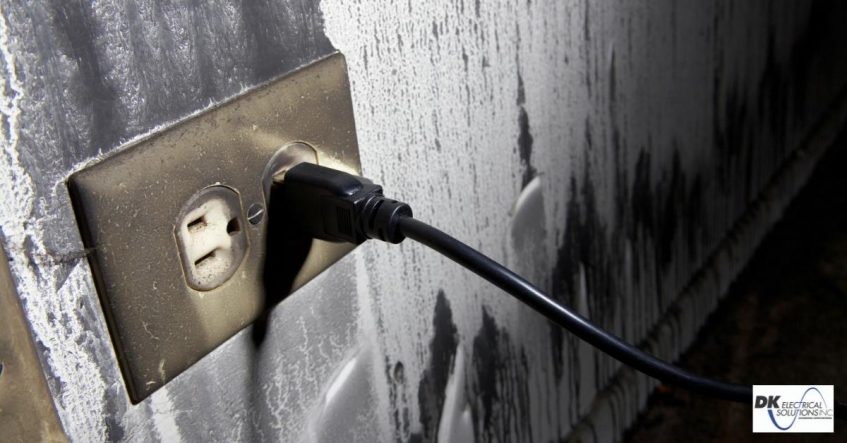
Electrical arcing from loose wiring is one of the top causes of home fires in the U.S.
Flickering lights may also signal shock risks, especially in older homes or DIY installations.
Our friendly Master Electricians in Southampton, New Jersey, provide honest answers, upfront pricing, and expert diagnosis for electrical issues like flickering lights, wiring upgrades, and panel inspections.
We’ll explain all your options clearly and provide safety-focused, code-compliant solutions for your home.
It depends. Some flicker due to incompatible dimmers, but consistent flickering could signal faulty wiring. Yes, flickering LED lights can be dangerous if not addressed.
We’re here to make sure your home is safe, your lighting works as it should, and your peace of mind is restored. Whether it’s a quick fix or a deeper electrical concern, our team is ready to help—promptly, professionally, and with the expert care you expect from DK Electrical Solutions.
If you have an electrical problem in your home, you’ll naturally want it fixed as soon as possible to minimize the amount of disruption it causes in your family’s daily life. That will probably involve searching for a qualified electrician in your area. Of course, you’ll likely try to read some customer reviews before calling to schedule an appointment, as you should. You should also be sure to check the credentials of the New Jersey electrician service you’re considering. That is your best assurance of receiving quality electrical work and reliable service.
There’s great peace of mind that comes with finally getting a standby generator for your home. In a coastal state like New Jersey, it’s even more of a relief to know your family’s electricity supply is protected when the next big storm rages through the area and knocks out the public power source for days or even weeks again. But, there are a few key questions you need to ask when you’re planning to buy a home generator. We’ll help answer these here for you:
Your home’s electrical system is the network of power that enables your family to enjoy fully modern life, filled with all the technologies that help improve daily life. On the other hand, an electrical system that is not functioning as designed in some way may be a profound danger to everyone and everything you care about. Therefore, keeping your residential electrical systems working safely and without interruption must be a top priority for every homeowner. So, use this quick electrical preventive maintenance checklist frequently:
It’s never a good time to turn on an appliance or device and find that there’s no electricity coming from the outlet. That’s frustrating and more than a little annoying. Now you have to go get power at some other outlet for the item you need to use. Plus, you’ll have to investigate the problem with the apparently dead outlet.
Maintaining your home’s electrical system in a safe and efficient operating condition is a top priority all year-round. Winter monitoring of equipment and systems becomes even more important in areas where electrical issues increase with seasonal increases in usage. Addressing basic electrical problems and solutions before issues become serious can help you prevent the need for major repairs or replacements and loss of power when you need it most. Here are four of the most common electrical problems to prepare for before winter:
Even though we use electrical outlets every day for so many essential functions, electrical outlet problems in a home are very often overlooked. Most people only notice what’s happening with an outlet if it stops working. But, it is crucial to be aware of issues in outlets before they worsen to the point that they put people and property at risk of a house fire. Below are some of the most common signs to help you know when to replace electrical outlets in your home.
Recessed lighting is very popular with residential and commercial interior designers because it’s unique, beautiful, and exceptionally versatile. Recessed lights are ideal for focusing soft light on small areas or for lighting a whole room, and can be used for any design purpose — business utility, aesthetics, or ambiance. Of course, as with any type of lighting, room designs and lighting layouts are the keys to making the most of the functional and aesthetic benefits of recessed lights. Here are some great tips for creating your unique recessed lighting layout.
Home electrical problems are one of the most serious issues for New Jersey residents, because of the risk of house fires. So, it’s a good idea to be aware of the most common issues that cause people to call for home electrical repairs in New Jersey. Let’s look at the kinds of electrical problems most frequently reported to DK Electrical Solutions by our customers and how to determine if you need an electrical repair.