Why Homeowners Wonder if Reversing a Ceiling Fan Actually Works
Here is a familiar scene. The heat is running, the thermostat looks right, yet the room still feels cold. You bump the heat up again, but the warm air never settles where you sit. If you are a homeowner in Burlington or Camden County and you have ever wondered whether reversing the fan in winter makes a difference, you are not alone.
This guide explains exactly how ceiling fan direction works, when it helps, when it does nothing, and how to set things up so you get real comfort and lower energy use. You will also learn the signs that your fan or wiring may be the problem and when it is time to call a certified electrician.
Does Reversing a Ceiling Fan in Winter Really Help
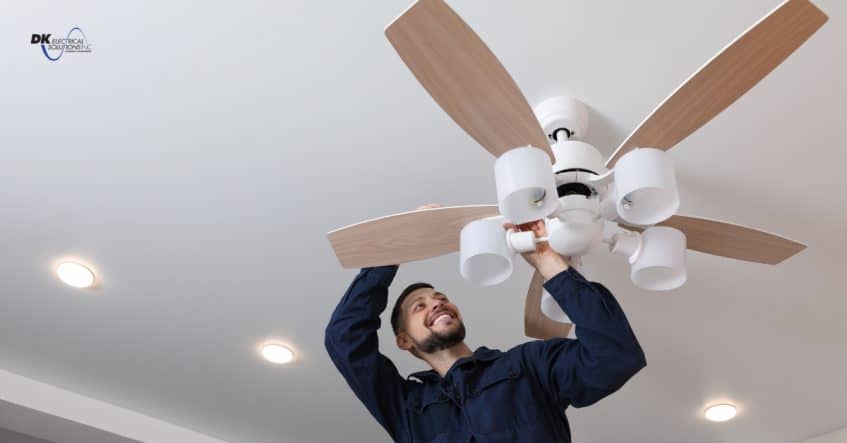
The short answer is yes. Running your ceiling fan clockwise at a low speed in winter helps pull cool air up and push warm air down along the walls. Warm air naturally rises and gets trapped near the ceiling, and reversing the fan simply puts it back where you can feel it.
If you want a deeper explanation of fan direction for every season, you can also review how ceiling fan blades should spin with this helpful resource on which way to spin them in summer and winter.
When this is done correctly, homeowners usually notice steadier room temperatures and a mild drop in heating costs because the thermostat is not working as hard.
How to Set Your Fan the Right Way for Winter
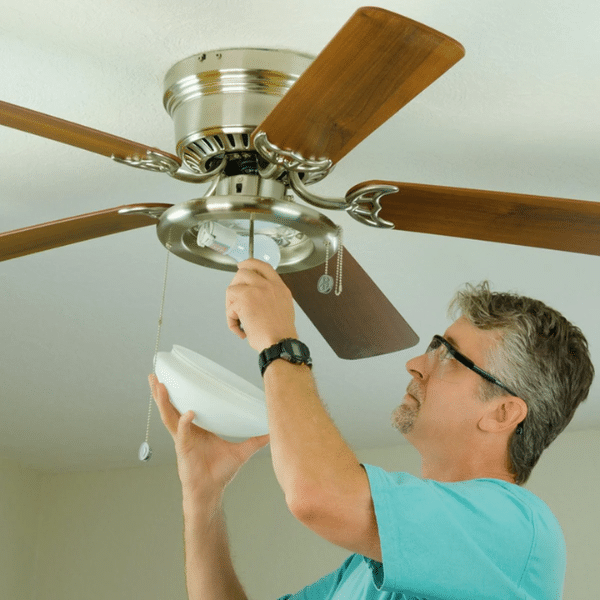
Most ceiling fans have a small switch on the motor housing that changes blade direction. A clockwise setting is what you want for winter.
Here is the simplest way to get it right.
Turn the fan off
Find the small direction switch on the motor housing
Flip it so the blades rotate clockwise
Set the speed to low
Stand beneath the fan and confirm you do not feel a breeze
If you are unsure whether your fan is installed correctly or has the right downrod length for the room, you can refer to these ceiling fan installation and use tips.
Homes in New Jersey often have a mix of room sizes. Large open rooms, vaulted ceilings, and tall foyers respond especially well to this trick because they trap more warm air near the ceiling.
Why Fan Direction Makes a Noticeable Difference
Here is the thing. Warm air always rises. Without help, it sits near the ceiling and never moves back down to the living level, where you actually feel it. A fan set to clockwise operation pulls cool air up, displaces the warm air collected above it, and lets that warm air slide down the walls and into the room.
At DK Electrical Solutions, we help hundreds of local homeowners troubleshoot comfort issues tied to ceiling fans, aging wiring, poor airflow, and incorrect installations. Our team includes certified Master Electricians who regularly install, repair, and optimize fan systems in homes throughout Burlington and Camden Counties.
If you are planning seasonal upgrades, our resource on lowering utility bills is another great place to start.
Ready for Better Comfort Without Using More Energy
If you are interested in making your home feel warmer without touching the thermostat again, you are welcome to explore ceiling fan upgrades, wiring improvements, or safe installation options from our team. You can also look into professional ceiling fan installation in New Jersey if your current fan is outdated or poorly installed.
Stand directly beneath the fan. If you feel any noticeable breeze or downward airflow, it is spinning counterclockwise, which is the summer setting. In winter, the fan should be running clockwise at a low speed. When it is spinning correctly for winter, you should feel almost no airflow directly underneath the blades. Instead, the air feels still and comfortable.
In many New Jersey homes, reversing the fan can improve heating efficiency by five to fifteen percent. Rooms with high ceilings or poor airflow benefit most. If your home feels drafty or uneven in winter, these common winter electrical problems may also be contributing factors.
Low speed works best. If your fan struggles to run smoothly on low or produces humming noises, you may need to troubleshoot. You can refer to the electrical troubleshooting support for South Jersey to rule out wiring issues.
Most modern fans reverse. Older models or budget fans may not. If your fan does not reverse or has a worn switch, a replacement may give you better comfort. You can also check options for spring ceiling fan installation and repair.
Wobbling or humming usually points to installation issues, blade imbalance, or wiring problems. If the symptoms get worse when reversing direction, the fan may need repair or replacement. For guidance on fan failure, here is what to do if your electric fan stops working.
Smart controls can help, but only if your wiring and fan motor are compatible. For a full installation, a professional can make sure the wiring is safe. Homeowners in South Jersey often pair smart controls with professional fan installation services to ensure everything works as expected.
Take the Next Step Toward a More Comfortable Home
If your ceiling fan is not giving you the comfort boost you expected or if you suspect the wiring or installation is older, it may be time for a quick professional inspection. You can also explore electrical troubleshooting services to get ahead of any developing problems.
You can reach out to schedule an appointment or request a quick quote for ceiling fan service, wiring upgrades, or safe new installations.
If your rooms still feel dim or “off” even after you replace bulbs or add lamps, the problem usually is not the fixtures. It is the layout.
Recessed lighting can completely transform how your home looks and feels, but only if the placement, spacing, and beam angles are planned correctly. Too few cans, and you get dark corners. Too many, and your ceiling starts to look like a runway.
If you live in Burlington or Camden County and you are wondering what the best layout for recessed lighting is in your home, you are not alone. In this guide, we walk you through how a professional looks at recessed lighting design, the most effective layout patterns, and how we custom plan lighting for each room so you get bright, comfortable, and efficient light where you actually need it.
Understanding How Recessed Lighting Layout Shapes A Space
The “best” layout for recessed lighting is not one single pattern. It is the layout that supports how you use the room, highlights what matters, and avoids glare and shadows.
When we design recessed lighting, we think about three layers of light:
Ambient light: Overall brightness so you can move around safely.
Task light: Focused light over counters, islands, desks, or reading areas.
Accent light: Light used to highlight art, fireplaces, built ins, or architectural details.
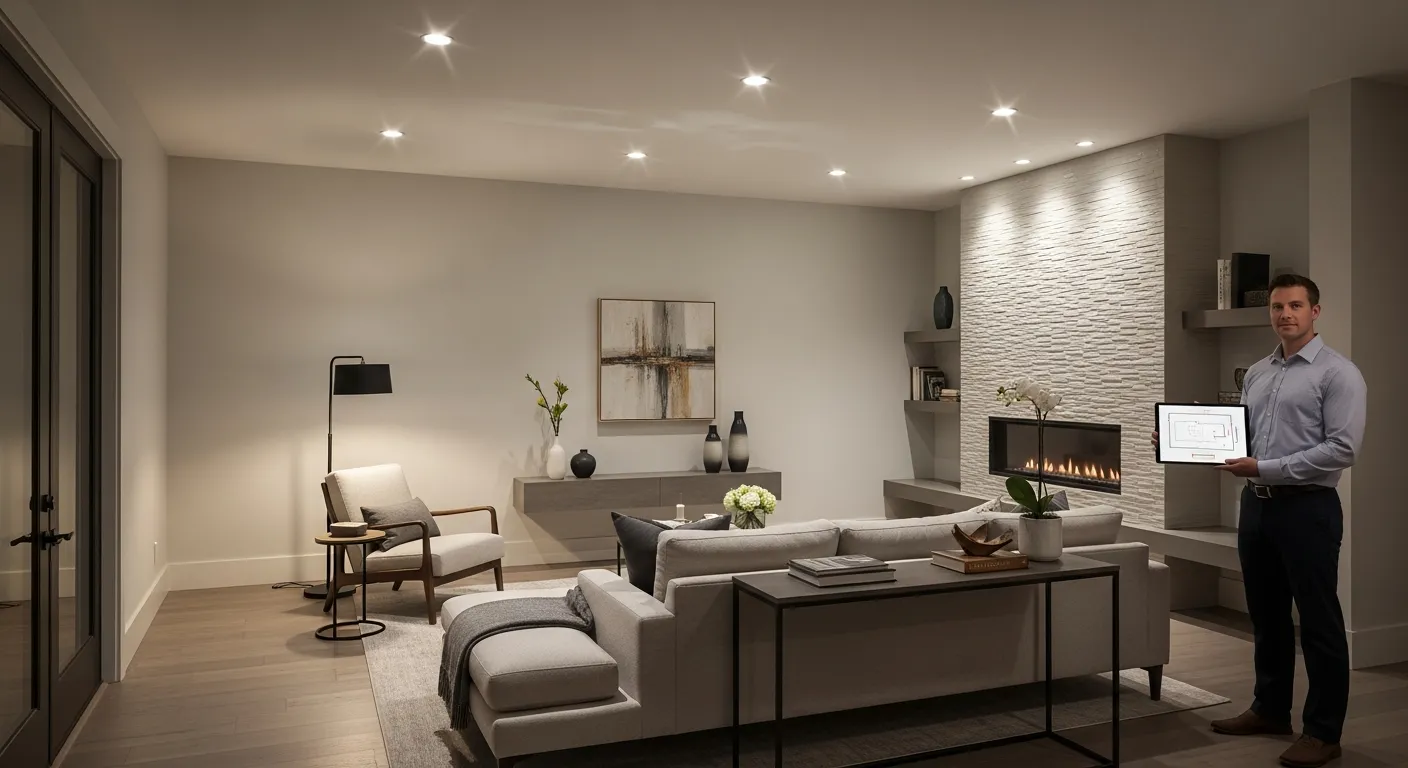
A smart layout combines these layers so the room feels balanced. For example, in a living room we might rely on recessed fixtures for ambient light, then add accent cans aimed at a fireplace and task cans over a reading chair.
If you want a deeper jump into how recessed light affects mood and function, we walk through beam angles, fixture types, and spacing in more detail in our guide on how to design your recessed lighting layout.
What this really means is that there is no single “X feet apart“ rule that works in every room. Your ceiling height, paint color, furniture layout, and even your age and eyesight all affect the right plan. That is why a professional layout always starts with how you live in the space, not just where the joists are.
Key Factors Professionals Consider Before Planning A Layout
Before we ever mark a ceiling for recessed lights, we walk the room with you. Here are the main factors we look at and why they matter.
Ceiling height and room size
The taller the ceiling, the farther light has to travel. That affects:
How many fixtures you need
How strong each light should be
How wide the beam angle should be
For example, an 8 foot ceiling might use smaller cans with tighter spacing, while a vaulted ceiling often needs fewer fixtures with wider beams but higher output.
Room function and traffic flow
We ask questions like:
Where do you usually sit, cook, read, or work in this room?
Where do kids play or do assignments?
Which parts of the room are rarely used?
This lets us aim task lighting exactly where you need it and avoid shining lights directly into your eyes when you are seated.
Surface colors and finishes
Light bounces. Dark cabinets, wood ceilings, or deep wall colors absorb more light. Glossy countertops can create glare.
We may increase the number of lights or adjust the brightness in darker rooms. In kitchens with shiny stone tops, we often adjust angles to avoid bright reflections. Our article on electrical safety and lighting upgrades explains how smarter lighting can also improve safety, not just style.
Existing wiring and panel capacity
A perfect layout on paper still has to work with your home’s electrical system. As licensed electricians in New Jersey, we always check:
Circuit capacity and panel condition
Location of joists and existing runs
Any older or outdated wiring that needs attention first
Once we understand your room and your goals, we choose the layout pattern that will give you even light and minimal glare.
Perimeter layout
We place lights in a ring around the edges of the room, usually a bit in from the walls. This works well when:
You want to wash light down the walls to make a room feel larger
You have built ins or wall art you would like to highlight
You plan to use lamps or a chandelier for central light
Perimeter layouts are excellent in living rooms and bedrooms where softer, indirect light feels more comfortable.
Grid layout
This is a more uniform pattern, with lights spaced in a simple grid across the ceiling. We use grids when:
You need very even brightness across the whole area
The room is large or multi use, like a finished basement
There is no single “center” but you still want balance
In basements, we often combine a grid with dedicated task lights over game tables or desks. Our basement finishing wiring services frequently include recessed lighting grids tied to multiple switch zones so you can control different areas independently.
Task focused rows
In kitchens, offices, and laundry rooms, we line recessed lights in rows directly over work zones.
Typical examples:
A row over the sink and main counters
A separate row centered over the island
A row along a built in desk or craft table
This puts light where you need it most and prevents your body from casting shadows while you work.
Accent and wall wash layouts
Accent layouts do not necessarily light the whole room. Instead, we place lights to:
Room By Room Recommendations For Recessed Lighting Layouts
Every room in your home has its own job. The best recessed lighting layout respects that.
Kitchen
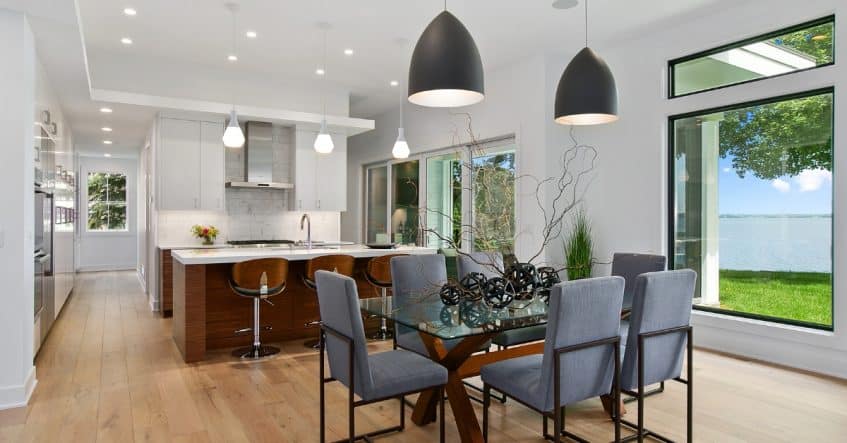
Kitchens are where layout mistakes show up fast. We focus on task lighting first, then fill in ambient light.
Common plan:
Rows of cans centered over countertops, not down the middle of the room
Dedicated fixtures over the sink and island
Options for under cabinet lighting to reduce shadows
We aim for overlapping beams so you do not work in your own shadow. If you do a lot of cooking or have darker cabinets, we will usually add a bit more light and tie it to dimmers for flexibility.
Living room or family room
In living rooms, flexibility is the goal. You might be watching TV one night and hosting guests the next.
Our typical approach:
Perimeter layout around the seating area
A few accent cans aimed at the fireplace, TV wall, or art
Separate switch zones so you can dim or turn off lights while watching TV
In bedrooms, harsh overhead light can feel uncomfortable. We usually recommend:
A soft perimeter layout that keeps light off the bed area
Task lights near reading chairs or a desk
Dimmers as a must have, not a luxury
We rarely center lights directly over pillows. That way you can relax under softer light, then bring up brightness only when you are organizing or cleaning.
Bathroom
Bathrooms need clear, flattering light, especially around mirrors.
We typically combine:
Vanity lighting near eye level for faces
One or two recessed lights for general brightness
Careful aiming to avoid shadows under the eyes or chin
In larger baths, we may add a separate can near the shower. For ventilation and moisture control, many South Jersey homeowners pair lighting work with bathroom fan installation.
Hallways and entries
These are often overlooked, but good recessed lighting makes your home feel more inviting and safer.
Our usual plan:
Evenly spaced fixtures down the center of the hall
Slightly tighter spacing in long or windowless halls
Optional accent lights for artwork or family photos
If you are not sure where to start, our broader guide to the importance of lighting in your home is a good way to think about how each room should feel before we ever touch a wire.
Why A Professional Recessed Lighting Plan Beats DIY Every Time
We understand the temptation to buy a box of recessed cans at the home store and start cutting holes. The problem is that with lighting, mistakes are literally built into your ceiling.
Here is why a professional plan is nearly always worth it.
Safety and code compliance
Recessed lighting involves more than drilling a hole and connecting a couple of wires. We have to account for:
Existing wiring conditions and any aluminum or outdated wiring
Circuit loading so you do not create overloads
Insulation contact, fire safety, and local code requirements
Online rules of thumb are a starting point, not a complete plan. We bring tape measures, light meters when needed, and years of experience from projects across Burlington and Camden Counties.
We can look at a room and quickly see:
Where you will have shadows or hot spots
How future furniture changes might affect lighting
Which areas deserve separate dimmers or switch zones
That saves you from living with an odd, uneven layout or paying twice to fix it.
Cleaner finishes and less damage
Every extra hole in your drywall is another patch and paint job. We plan runs and placements to minimize cutting and to keep fixtures aligned and professional looking.
In short, DIY recessed lighting can look acceptable at a glance, but a professional plan looks right at every time of day and from every angle.
Ready To Get The Perfect Recessed Lighting Layout For Your Home?
If you are constantly fighting glare, dim corners, or the feeling that your rooms never look quite “finished,“ your recessed lighting layout is probably the culprit, not your bulbs.
We help homeowners in Burlington County, Camden County, and across South Jersey design and install recessed lighting that fits the way they actually live in their homes. From tight kitchens in older row homes to open concept family rooms in newer builds, we create layouts that layer ambient, task, and accent light into one clean, cohesive plan.
Instead of guessing at spacing or fixture types, we handle the design, safety checks, installation, and finishing so you end up with a bright, comfortable, and efficient home.
How To Prepare For Your Professional Recessed Lighting Consultation
To make your consultation as productive as possible, it helps to think through a few questions ahead of time:
Which rooms feel too dark or too harsh right now?
Where do you cook, read, work, or do hobbies most often?
Are you planning any other electrical upgrades, like a panel upgrade, EV charger, or generator?
When you are ready to move from ideas to a real plan, our licensed electricians can review your current system, walk your rooms with you, and map out a recessed lighting layout tailored to your home.
The best layout for recessed lighting layers ambient, task, and accent light so each room feels balanced, comfortable, and glare-free.
A professional recessed lighting layout always starts with how you use the space, factoring in ceiling height, room size, surface colors, and traffic patterns rather than relying on a one-size-fits-all spacing rule.
Different recessed lighting layout patterns—perimeter, grid, task-focused rows, and accent or wall wash—serve specific purposes and are chosen based on the room’s function and focal points.
Room-by-room planning is essential: kitchens prioritize task rows over counters and islands, living rooms benefit from perimeter and accent lighting, bedrooms need softer perimeter light with dimmers, and baths require careful coordination of vanity and ceiling lighting.
A professionally designed recessed lighting layout outperforms DIY by ensuring electrical safety, code compliance, minimal drywall damage, and clean, future-proof lighting control zones.
Frequently Asked Questions About Recessed Lighting Layouts
What is the best layout for recessed lighting in a typical living room?
The best layout for recessed lighting in a living room usually combines a soft perimeter layout for ambient light with a few accent cans aimed at a fireplace, TV wall, or artwork. Separate dimmer or switch zones let you switch between bright entertaining light and cozy movie-night lighting.
How do I figure out the best layout for recessed lighting in my kitchen?
In kitchens, start with task lighting, not the room center. Run rows of recessed lights over countertops, the sink, and island so you don’t work in your own shadow. Then fill in ambient light as needed and add under-cabinet lighting for darker surfaces or detailed food-prep tasks.
What factors should I consider before planning a recessed lighting layout?
A smart recessed lighting layout considers ceiling height, room size, how you use the space, furniture placement, surface colors, and glare from glossy finishes. Professionals also check wiring, circuit capacity, and joist locations to ensure the plan is both visually effective and safe for your electrical system.
How far apart should recessed lights be spaced on the ceiling?
There is no universal spacing rule because ideal placement depends on ceiling height, beam angle, fixture output, and room finishes. As a rough starting point, many designers space lights at about half the ceiling height in feet (for example, 4 feet apart on an 8-foot ceiling), then refine from there.
Is it better to DIY or hire a professional for a recessed lighting layout and installation?
Hiring a professional is usually best for recessed lighting. Electricians account for circuit loading, insulation contact, and code requirements, and they can predict shadows, hot spots, and future furniture changes. That reduces drywall damage, avoids overloads, and delivers a balanced layout that looks right from every angle.
Good News for NJ Drivers: EV Adoption Is Taking Off
Electric vehicles are becoming a normal part of New Jersey life. Statewide milestones tell a clear and positive story:
New Jersey has surpassed 200,000 registered electric vehicles.
Thousands more EVs are added every month across Burlington County, Camden County, and the surrounding region.
The state’s clean energy programs continue to support EV adoption and home charging.
For homeowners, this surge in EV ownership means more support, better technology, and expanding options for home charging solutions.
The Data: 200,000+ EVs—and Rising
New Jersey recently exceeded 200,000 electric vehicle registrations, marking a major clean transportation milestone for the state.
This milestone shows just how quickly EVs are becoming part of everyday life. As more drivers switch to electric, the convenience of fast, at-home charging has become a top priority.
Here’s what this means for homeowners:
More EVs = more demand for reliable home charging
Homeowners are choosing Level 2 chargers for faster overnight charging
Many households are upgrading service panels to support new electrical loads
With more than 200,000 EVs already on the road, New Jersey is quickly becoming a leader in home charging adoption—and homeowners who upgrade now are setting themselves up for years of convenient, efficient driving.
Why This Trend Is Great News for NJ Homeowners
The growing popularity of EVs brings several advantages for people choosing to install home charging stations.
1. Greater Convenience
No more waiting in line at public chargers or planning trips around charging stops. A home Level 2 charger lets you plug in at night and wake up with a full battery every morning.
2. Faster Charging
A Level 2 charger provides a stronger, dedicated 240-volt connection—delivering charging speeds up to 8x faster than a standard outlet.
3. Future-Ready Electrical Systems
Many homeowners choose to pair their charger installation with a panel upgrade, giving their home the capacity to support:
EV chargers
Heat pumps
Hot tubs
Home offices
Backup generators
It’s a smart long-term move that improves safety, performance, and flexibility.
How DK Electrical Solutions Helps You Take Advantage of the EV Momentum
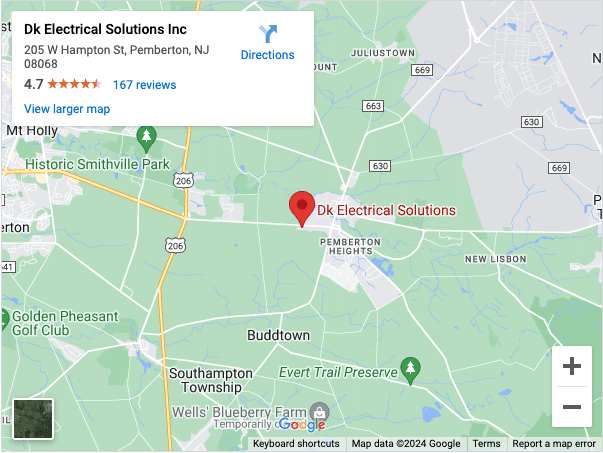
DK Electrical Solutions is a trusted local electrician serving Burlington and Camden Counties, offering expert installation for home EV chargers and service panel upgrades.
Certified Master Electrician on every job
Custom installations designed for your home’s layout and electrical capacity
Code-compliant, safe, and clean workmanship
Experience installing chargers from all major EV brands
Financing options to make upgrades more accessible
Instead of trying to DIY or relying on generic installers, homeowners get a local professional who understands New Jersey codes, housing styles, and the needs of modern families.
Why Now Is the Best Time to Upgrade Your Home Charging Setup
With New Jersey’s EV adoption climbing fast, more homeowners are moving early to set up their electrical systems for long-term success. Installing a home EV charger now means:
Maximum convenience for your daily driving
Better home value in an increasingly EV-friendly market
A safer electrical system built for modern technology
Smarter energy use that fits your lifestyle
Whether you’re already driving an EV or planning to get one soon, upgrading your home’s electrical system is one of the best ways to prepare.
Ready to Install a Home EV Charger in New Jersey?
Take your next step with confidence:
Request a free quote
Explore our services
See why customers choose us
With a certified master electrician and decades of experience, DK Electrical Solutions makes it easy to bring fast, reliable home charging to your New Jersey home.
Data Sources
Data Claim
Source Name
Source Type
Date
URL
New Jersey surpassed 200,000 registered electric vehicles.
ROI-NJ – New Jersey Hits Electric Vehicle Milestone